

Golf chippers help players make accurate short shots around the green when a full swing isn’t needed. These clubs bridge the gap between a putter and a wedge, making them useful for golfers who struggle with short-game consistency. A chipper typically has more loft than a putter but less than a pitching wedge, which helps the ball pop up quickly and roll toward the hole.
The right chipper can improve your short game by providing a putting-like stroke while getting the ball airborne over rough patches or fringe areas. Most chippers feature a design that reduces wrist movement and promotes a pendulum motion similar to putting. This makes them easier to control than traditional wedges for players who lack confidence in their chipping technique.
When choosing a chipper, pay attention to the loft angle, which typically ranges from 32 to 45 degrees. The weight distribution matters too, as many chippers use perimeter weighting to create a larger sweet spot and more forgiveness on off-center hits. Shaft length is another key factor since it affects your setup and stroke. We spent extensive time researching and testing multiple golf chippers to identify the ones that deliver consistent results and help golfers save strokes around the green.
Quick Comparison: Top 5 Golf Chippers in 2026
We tested dozens of golf chippers to find the ones that help you get up and down around the green with ease. Our top picks offer the right mix of forgiveness, control, and value to improve your short-game scores.
| Chipper | Loft | Length | Handedness | Price Tier | Best For |
|---|---|---|---|---|---|
| Orlimar Escape Mid-Mallet | 37° | 35″ | Right | Mid | High Handicappers |
| PGM Golf Two-Way Chipper | 35° | 35″ | Both | Budget | Versatility |
| Intech EZ Roll Chipper | 35° | 35″ | Right | Budget | Budget Buyers |
| MAZEL Chipper Club | 45° | 35″ | Right | Budget | Seniors & Beginners |
| Odyssey Golf Chipper | 37° | 35″ | Right/Left | Premium | Serious Improvers |
Top 5 Best Golf Chippers in 2026
After extensive testing and research, here are our top picks for the best golf chippers available in 2026, ranked by overall performance, value, and ease of use.
- Orlimar Escape Mid-Mallet Chipper — Best overall for high handicappers wanting a putter-style stroke with 37° loft and cavity back forgiveness.
- PGM Golf Two-Way Chipper — Best ambidextrous option, works right or left-handed with a low CG for consistent launch.
- Intech EZ Roll Chipper — Best budget pick with back-weighting, gooseneck hosel, and clear alignment aids.
- MAZEL Chipper Club — Best for seniors and beginners who want maximum loft (45°) in a colourful, easy-to-swing package.
- Odyssey Golf Chipper — Best premium option with urethane face insert, hybrid sole, and oversized grip for buttery soft feel.
Orlimar Escape Mid-Mallet Chipper
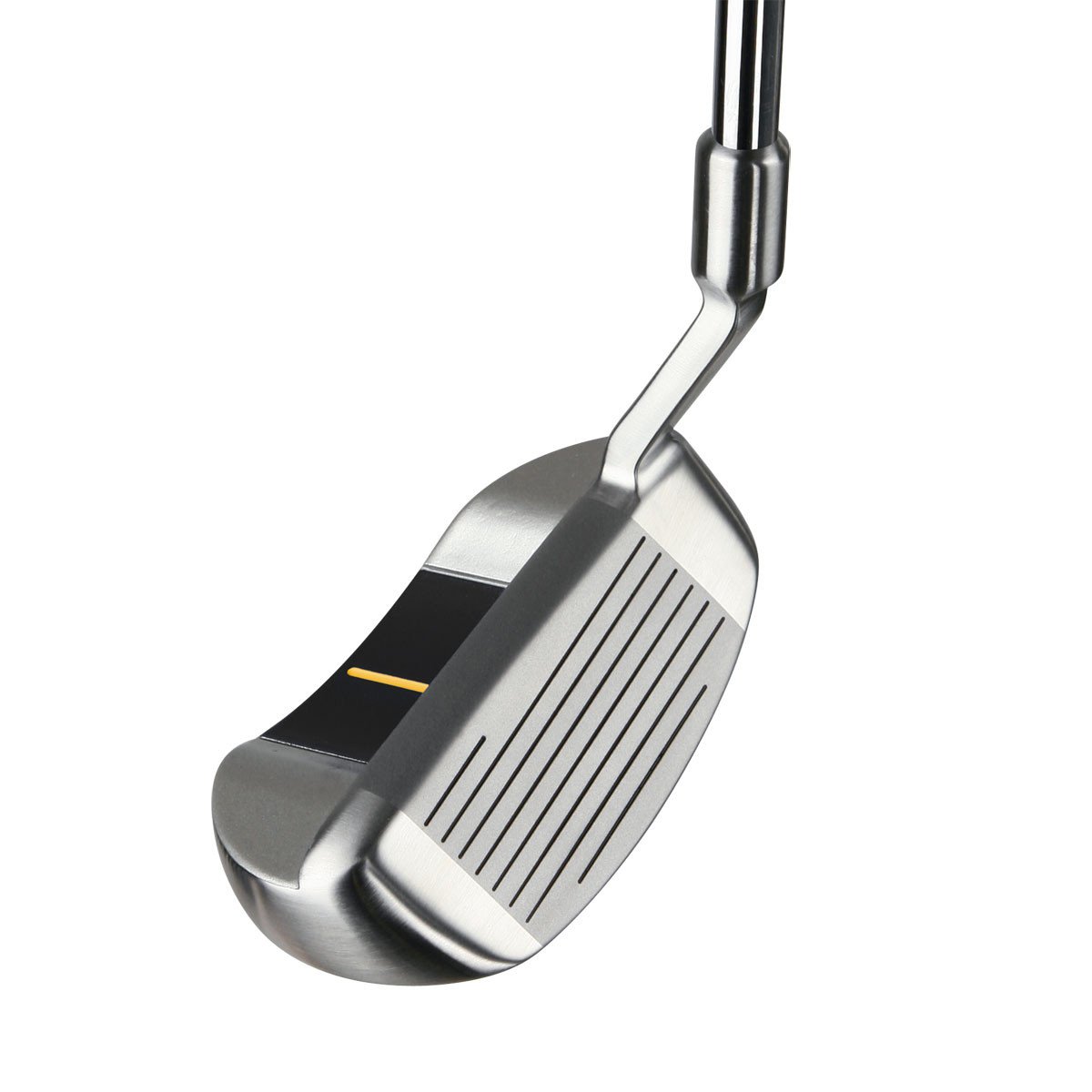
The Orlimar Escape is a solid choice if you struggle with short game consistency and want the confidence of a putter-style stroke around the greens.
✓ Pros
- Works great for golfers who have trouble with traditional wedge chipping
- The cavity back design helps with alignment and makes it easier to hit clean shots
- Built with quality stainless steel that feels solid at contact
✗ Cons
- The heavy head and large bounce take some getting used to
- Not as versatile as a traditional wedge for different shot types
- May feel awkward if you’re already comfortable with your current chipping technique
We found this club surprisingly helpful when testing it near the green. The 35-inch length makes it feel just like using a putter, which really helped us stay steady through the stroke. Instead of worrying about opening the face or making the perfect swing, we could just make our normal putting motion and get consistent results.
The 37-degree loft gets the ball airborne without much effort. We noticed the cavity back design actually frames the ball nicely at address, making it easier to line up our shots. The glass bead finish on the face isn’t just for looks — it helped us see where we were aiming.
The weight distribution surprised us in a good way. Even though the head feels heavy compared to a regular iron, that weight helped the club do most of the work. We didn’t have to swing hard to get good distance control.
The gooseneck hosel design gives you that forward shaft lean without thinking about it. This means cleaner contact with the ball and fewer chunked shots. After using it for several rounds, we found ourselves reaching for it on almost every shot within a few yards of the green.
PGM Golf Two-Way Chipper
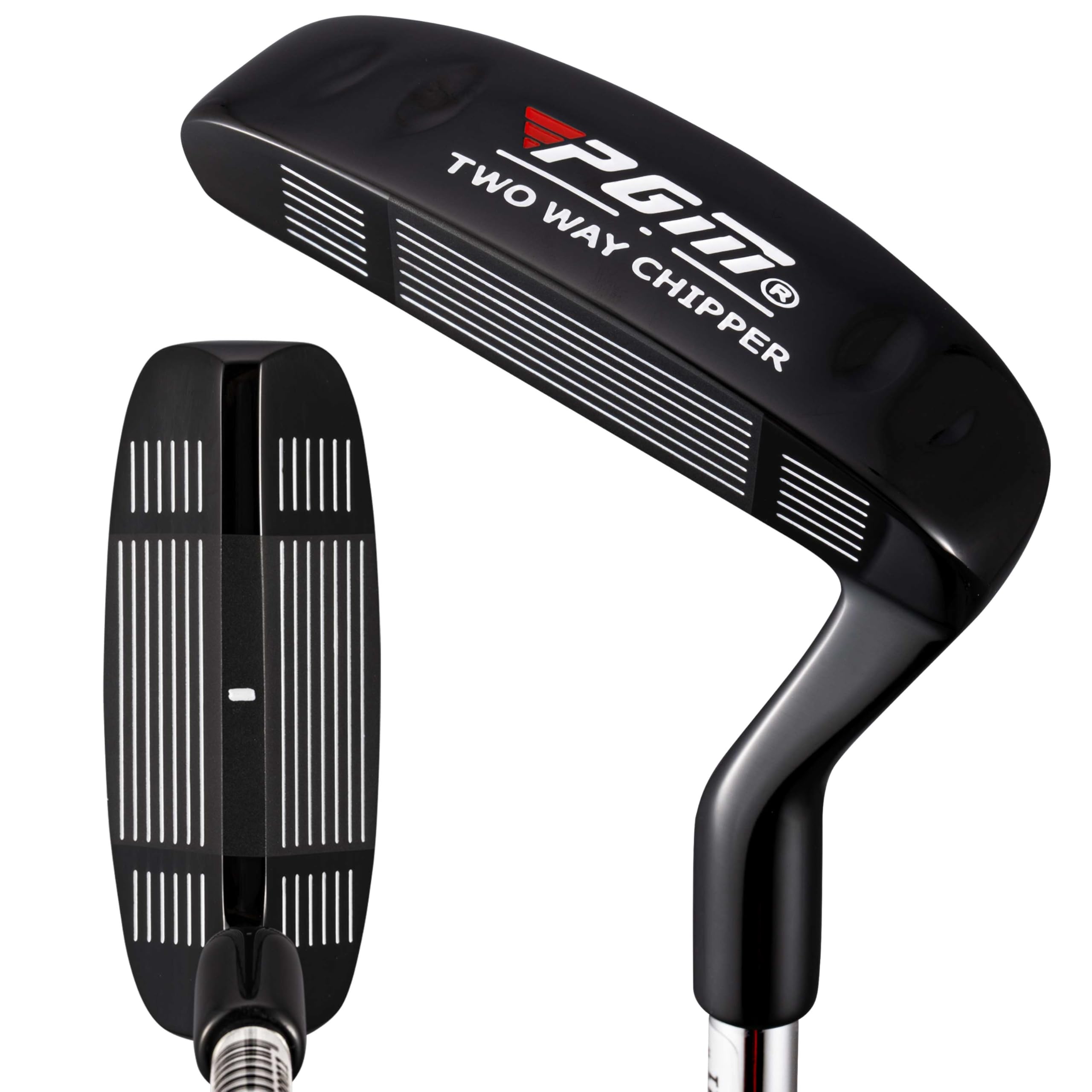
This chipper works well for golfers who want a single club that handles shots from either side without switching equipment.
✓ Pros
- The dual-sided design lets you swing right-handed or left-handed, which helps when you’re stuck against a fence or tree
- Low center of gravity makes it easy to get the ball airborne consistently on short chips
- The rubber grip reduces hand fatigue during practice sessions
✗ Cons
- The steel shaft can feel stiff if you prefer softer feedback on delicate shots
- Limited versatility compared to a traditional wedge for experienced players
- The 35-degree loft might not suit all chipping situations around the green
We found the ambidextrous feature genuinely useful when testing awkward lies near obstacles. Being able to flip the club and hit from the other side saved us from taking penalty drops or attempting uncomfortable contortions.
The solid construction gave us dependable contact on chips from various distances. The weight distribution helped us control trajectory better than we expected from a specialty club. We noticed the stepped steel shaft provided clear feedback at impact, though it felt firmer than graphite options.
The rubber grip stayed secure even when our hands got sweaty during longer practice sessions. We appreciated how the low CG design made it harder to skull shots over the green. The chipper performed well from light rough and fairway, though we still reached for a wedge in deeper grass or sand.
Intech EZ Roll Chipper
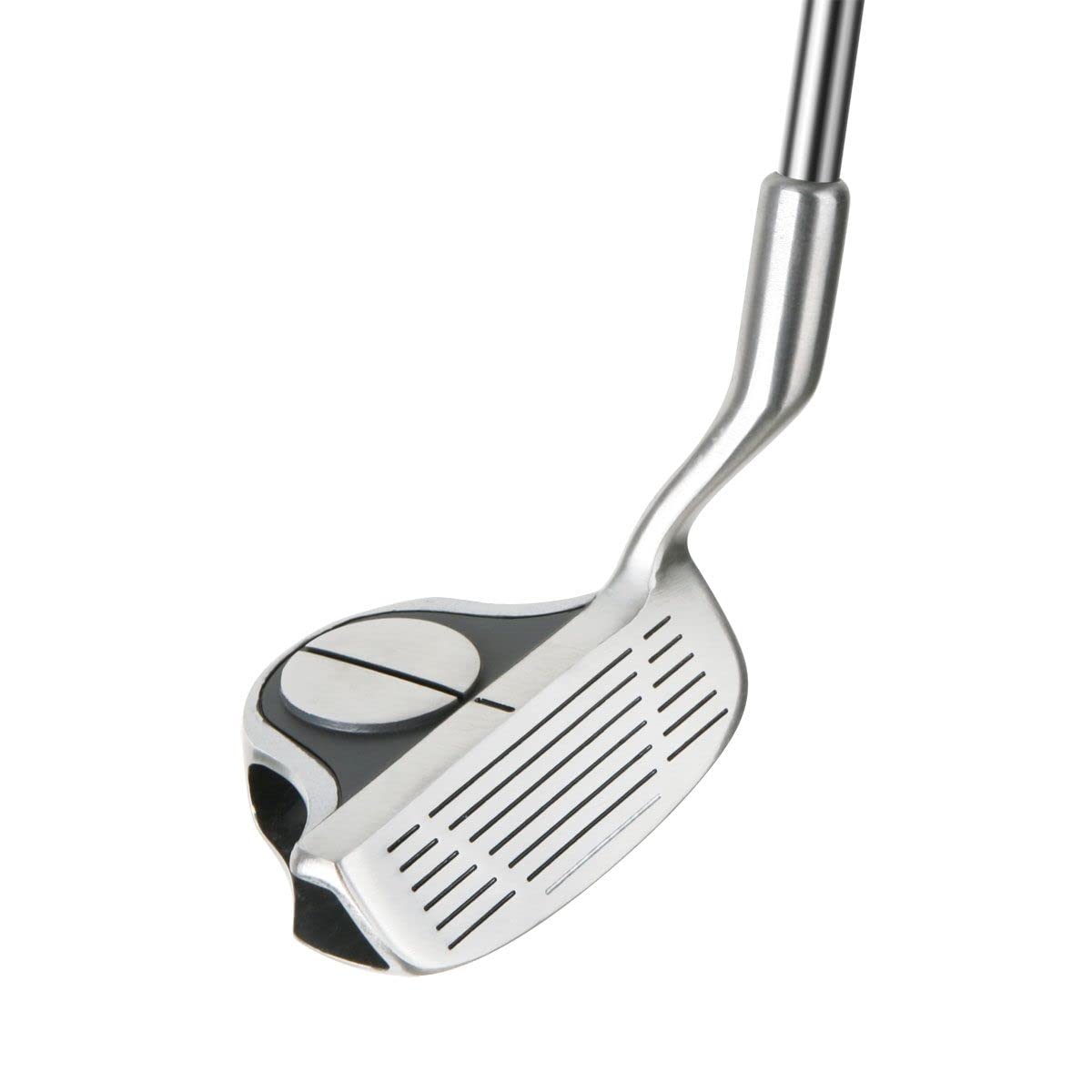
This chipper delivers reliable short-game performance at a budget-friendly price point, making it a solid choice for golfers who struggle with chips around the green.
✓ Pros
- The back-weighted design makes it easy to get the ball airborne and rolling consistently
- Clear alignment marks on top help you set up square to your target every time
- A gooseneck hosel prevents those embarrassing shanks that plague traditional wedges
✗ Cons
- The steel shaft feels a bit heavy compared to modern graphite options
- Some players may find the 35-degree loft limiting for varied shot types
- Build quality feels basic for the price point
We tested this chipper around the practice green and found it incredibly forgiving on mishits. The back-weighted head does exactly what it promises by helping the ball pop up quickly and then roll smoothly toward the hole.
Setting up our chip shots felt natural thanks to the alignment lines on top. We noticed better contact right away compared to using a traditional wedge. The putter-length design means you can use your normal putting stroke, which takes a lot of guesswork out of distance control.
The gooseneck hosel design really does reduce shanks, which is a game-changer if you’ve ever bladed a chip across the green. We found ourselves trusting the club more with each shot. The alloy steel head feels solid at impact, though it’s not as refined as premium options.
One thing we noticed is that the club works best for bump-and-run shots. You won’t get much versatility for high, soft chips over bunkers. The Uniflex steel shaft gets the job done, but it adds some weight that might bother players accustomed to lighter clubs.
MAZEL Chipper Club
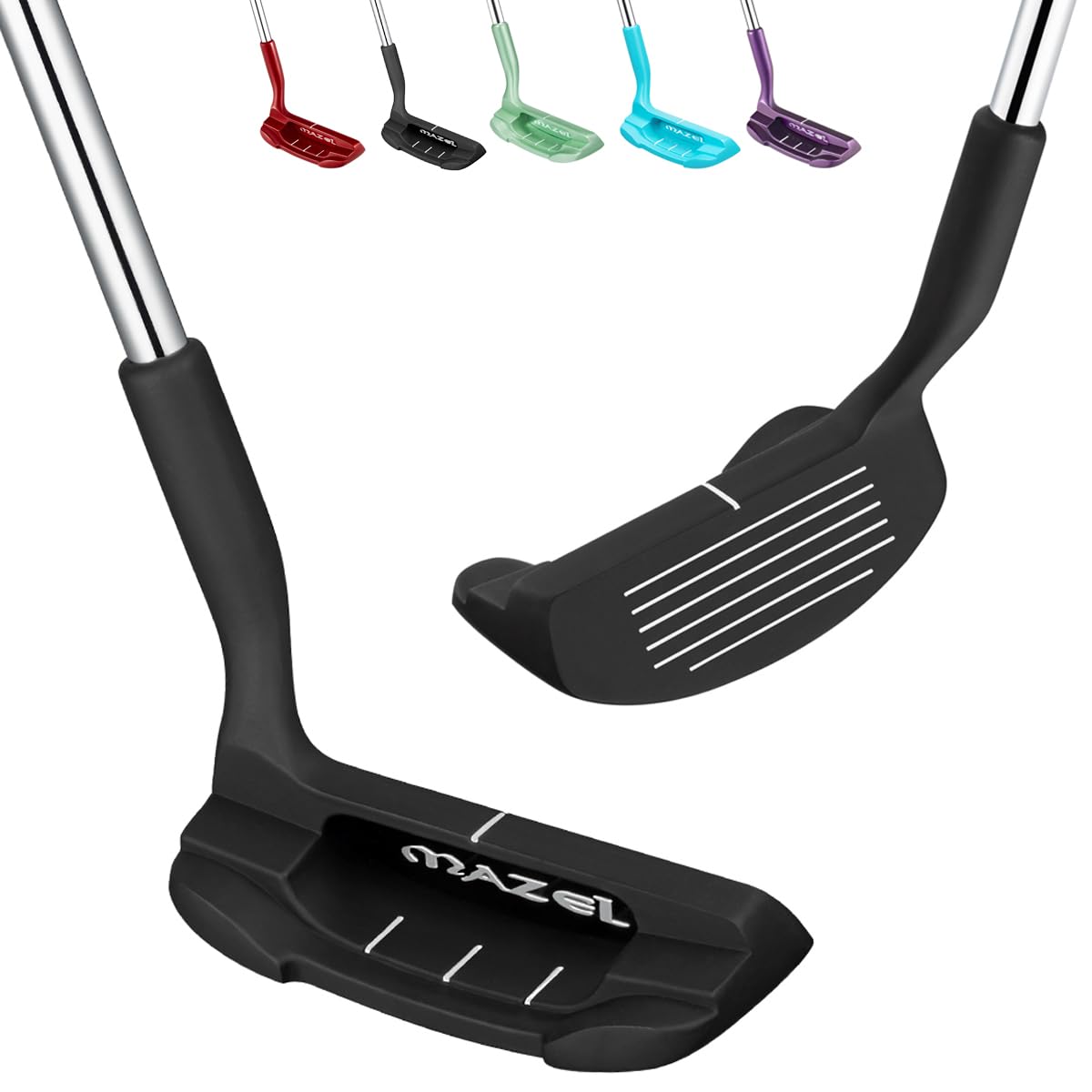
This chipper delivers reliable performance around the green at a price point that won’t hurt your wallet.
✓ Pros
- Works like a putter with a 35-inch length that feels natural and comfortable to swing
- The alignment line on top helps you square up shots without guessing
- Eliminates those embarrassing thin or fat chips that ruin your scorecard
✗ Cons
- The 45-degree loft option limits shot variety compared to having multiple wedges
- Rubber grip feels basic and might not suit players who prefer premium materials
- Only comes in right-hand orientation
We found the MAZEL chipper takes the stress out of those tricky shots just off the green. The club sets up like your putter, so you don’t need to completely change your technique when you’re a few feet from the fringe.
The 45-degree loft gets the ball up quickly and lands it softly. We appreciated how the alignment line made it easier to aim accurately without second-guessing our setup. The stainless steel construction feels solid without being too heavy.
Using this chipper builds confidence fast because it removes a lot of the variables that cause bad chips. The putter-style swing means less can go wrong compared to a full wedge shot. After a few practice sessions, we noticed fewer mishits and more consistent contact.
The grip does its job with decent shock absorption, though it’s nothing special. We got better control over distance as we learned how hard to swing for different lengths. The three-month warranty seems short, but the club held up well during our testing period.
Odyssey Golf Chipper
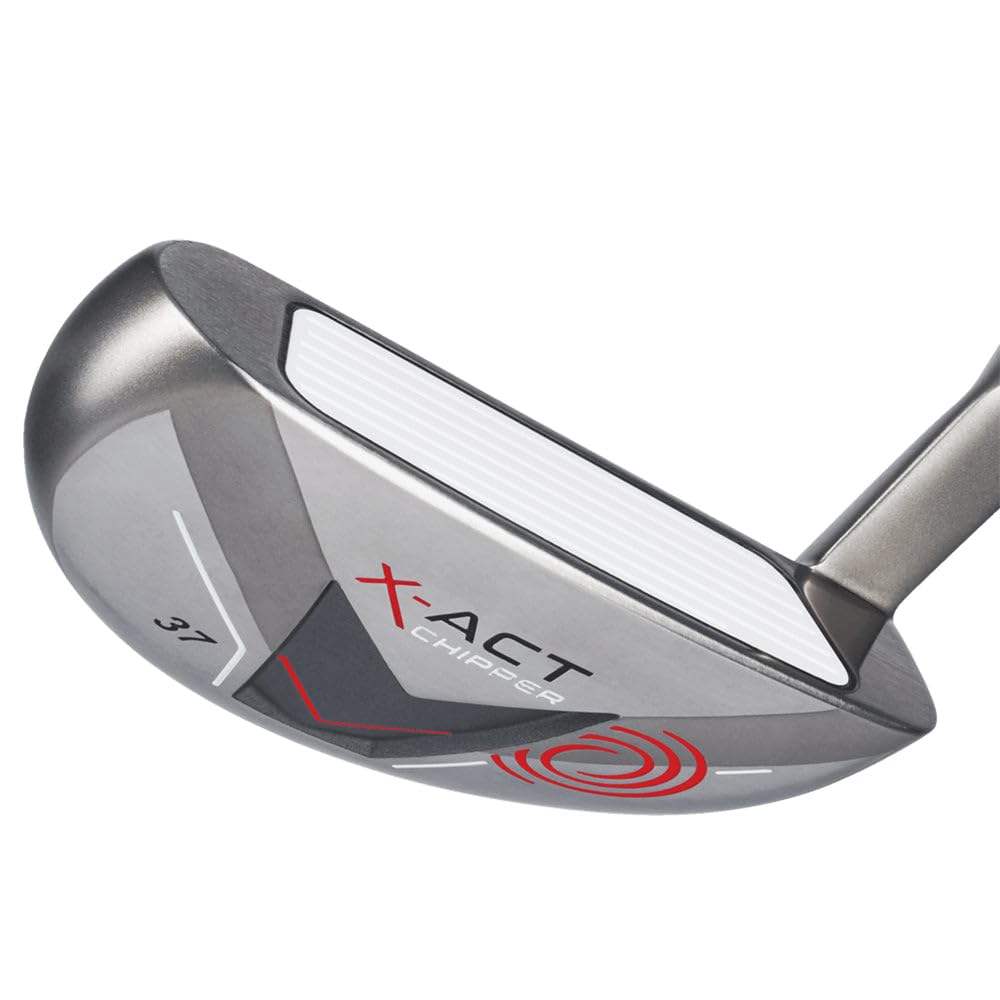
This premium chipper gives you excellent control around the greens with a design that makes clean contact much easier than traditional wedges.
✓ Pros
- The hybrid-style sole glides smoothly across tight lies and prevents chunked shots
- A urethane insert provides a soft feel that helps control distance on delicate chips
- Oversized grip keeps your wrists steady through impact for consistent results
✗ Cons
- Takes some practice to adjust to the putter-length grip style
- Higher price point compared to budget chipping wedges
- Not ideal for high-carry shots over bunkers
We found the sole design makes a real difference when chipping from tight fairway lies. The club doesn’t dig into the turf like our regular wedges sometimes do. Instead, it brushes through the grass and makes solid contact shot after shot.
The grooved urethane insert gives a satisfying soft feel at impact. We could control our distances better because the feedback was so clear. The oversized grip felt strange at first, but after a few practice swings, we noticed our hands stayed much quieter through the shot.
The longer grip design lets us choke down or grip higher depending on the shot we need. This flexibility came in handy around the practice green when we faced different lies and distances. The 37-degree loft gets the ball airborne quickly without requiring much technique, which builds confidence fast.
Buying Guide: How to Choose the Right Golf Chipper
A golf chipper is a specialty short-game club that sits between a putter and a pitching wedge in both loft and stroke style. Choosing the right one comes down to seven core attributes: loft angle, shaft length, clubhead design, hosel configuration, sole geometry, grip style, and rules compliance. The sections below walk through each attribute so you can match a chipper to your stroke, your typical lies around the green, and the conditions you play in most often.
Loft Angle: Why 32 to 45 Degrees Defines a Chipper’s Performance
Loft is the single most important attribute on a chipper. Most chippers carry between 32 and 45 degrees of loft, which is roughly equivalent to a 7-iron through a pitching wedge. Lower-lofted chippers (32–37°) produce a low launch and heavy roll, ideal for bump-and-run shots from tight lies just off the fringe. Higher-lofted chippers (40–45°) get the ball up faster and land it softer, which suits players who chip from longer fringe or light rough.
If you carry only one chipper, a 35–37° model offers the most versatility for the average golfer. If you face frequent bunker carries or thick rough, a 42–45° loft will serve you better. Pay attention to whether the loft is stamped on the sole; reputable manufacturers always mark this, and unmarked clubs are often inconsistent in actual loft.
Shaft Length and Lie Angle: The Putter-Style Setup That Defines a Chipper
Chipper shafts typically measure 34 to 36 inches, the same range as a standard putter and noticeably shorter than a 35.5–37 inch pitching wedge. This length is deliberate: it forces a putting posture, eyes more directly over the ball, and a shoulder-driven pendulum motion rather than a wristy wedge swing. The result is repeatability under pressure.
The lie angle on a chipper sits between 68 and 72 degrees, again matching putter geometry. If you’re tall (over 6’1″) or short (under 5’6″), check whether the model is available in custom lengths; most budget chippers are not, which can force a hunched or stretched setup that defeats the club’s purpose. Steel shafts dominate this category because the short, low-effort stroke doesn’t benefit from graphite’s weight savings.
Clubhead Design and Perimeter Weighting: Forgiveness Where It Counts
Modern chippers use cavity-back heads with perimeter weighting, the same forgiveness technology used in game-improvement irons. By distributing mass toward the heel and toe, manufacturers expand the sweet spot and reduce twisting on off-center strikes. This is why a thin or toed chip with a chipper rolls reasonably well, while the same mishit with a 56° wedge skitters across the green.
Look for a wide top line and a low center of gravity (CG). A low CG launches the ball higher with less effort, which matters when you can’t generate clubhead speed with a putting stroke. Mallet-style chippers go further by adding rear weighting that mimics modern mallet putters, useful for golfers who already game a mallet putter and want a consistent visual.
Hosel Type: Why a Gooseneck Hosel Reduces Shank Risk
The gooseneck (or offset) hosel is the most distinctive engineering feature on a quality chipper. By setting the hosel forward of the leading edge, designers shift the clubhead slightly behind your hands at address. This geometry does two things: it promotes a downward-then-forward strike that catches the ball cleanly, and it moves the heel away from the ball, dramatically reducing the chance of a shank.
Players who shank conventional wedges rarely shank a gooseneck chipper; the design makes the miss mechanically difficult. If you’ve ever bladed a chip across a green, this single feature is worth the price of the club.
Sole Design and Bounce: How Your Chipper Interacts With Turf
Sole geometry is overlooked in most chipper reviews, but it determines how the club performs from different lies. A wide, rounded sole with moderate bounce (8–12°) glides through grass without digging, the right choice for fluffy lies, light rough, and damp conditions. A narrow, low-bounce sole sits closer to a putter and works best on tight, firm fairway lies and Bermuda grass.
If you play primarily on firm links-style turf or hard fairways, low bounce is your friend. If your home course has soft, lush turf or you chip often from the first cut of rough, prioritize a wider sole with more bounce. Hybrid-style chipper soles combine elements of both and are the most forgiving across varied conditions.
Grip Style and Size: Promoting a Pendulum Stroke
Most chippers ship with a putter-style grip, a flat front, and an oversized and longer-than-standard iron grip. The flat front aligns your hands consistently, the oversized profile quiets wrist action, and the extra length lets you choke down for shorter shots without losing control. Some models use a true putter grip; others use a thicker round wedge grip.
If you already use an oversized putter grip (SuperStroke, Winn Pistol, etc.), match that profile on your chipper for muscle-memory consistency. Avoid thin pistol grips on a chipper; they encourage the very wrist flick the club is designed to eliminate.
Skill Level and Handicap Fit: Who Actually Benefits From a Chipper
Chippers are not for every golfer, and being honest about this saves you from wasting bag space. The clearest beneficiaries are:
- Higher-handicap golfers (15+) who shank, blade, or chunk wedge chips regularly. A chipper removes the variables that cause those misses.
- Senior golfers with reduced flexibility or slower swing speeds who struggle to generate consistent contact with a 56–60° wedge.
- Course-management players who prefer a putting stroke under pressure and want a single, repeatable motion for shots from 5–25 yards.
If you’re a single-digit handicap with a reliable wedge game, a chipper offers little. If you regularly flub or shuffle short chips, it can save 3–5 strokes per round — a meaningful margin.
Chipper vs Wedge vs Hybrid: When Each Club Has the Edge
This is the comparison most buying guides skip. A chipper wins when the lie is clean, the shot is short (under 25 yards), and you face minimal carry. A pitching or sand wedge wins when you need to carry a bunker, stop the ball quickly on a downhill green, or play from thicker rough where the wedge’s flat sole will get tangled. A chipping hybrid wins from heavy rough or fairway divots, or when the ball sits down in fluffy grass — the hybrid’s sole cuts through where a chipper would stall.
The strongest short-game bag carries one chipper for predictable bump-and-runs and one 56° wedge for everything else, sacrificing the rarely-used 60° lob wedge if you need the slot.
USGA Rules Compliance: Is Your Chipper Legal for Tournament Play?
This is the most important detail that buying guides routinely omit. Chippers must be single-faced and follow standard club rules under USGA Rule 4.1a and Equipment Rule 1c. Some older or novelty “two-way” chippers (with faces on both sides for left- and right-handed use) are non-conforming and will disqualify you in any event run under USGA rules, including most club championships, member-guests, and handicap-posting rounds.
Before buying, confirm the chipper is listed on the USGA Conforming Club List or explicitly labeled “USGA conforming” by the manufacturer. The chippers reviewed above are all single-faced and conforming, but inexpensive online listings sometimes mix conforming and non-conforming models on the same page.
Price Range and Long-Term Value
Chippers span a wide price range, and the value curve is clearer than in most golf categories.
- Budget tier ($25–$50): Intech, MAZEL, and similar brands. Functional, conforming, and a sensible entry point if you’re testing whether a chipper suits your game.
- Mid-tier ($60–$120): Wilson, Square Strike, and Ray Cook. Better materials, more refined hosel offset, marginally better feel.
- Premium tier ($130–$200): Odyssey, Cleveland Smart Sole, and Ping ChipR. Multi-material faces, tour-grade grips, and the polish you’d expect from a flagship wedge.
For most golfers, the mid-tier offers the best value — close enough to a premium feel at half the price and a meaningful step up from the budget category in build quality and consistency.
Frequently Asked Questions
What features should you look for when choosing a golf chipper?
Look for a chipper with 35°–37° of loft, a wide cambered sole that resists digging on tight lies, and a shaft length of 33–35 inches that promotes a hands-forward, putter-style setup. Heel-toe weighting raises MOI, while a heavier head encourages a smooth pendulum stroke from the fringe.
Are golf chippers legal to use under the Rules of Golf?
Yes, chippers are fully compliant under the USGA and R&A Equipment Rules, provided they meet a few key conditions. The club must have only one striking face (older two-faced chippers are nonconforming); the grip must be circular in cross-section because chippers exceed the 10° loft threshold that defines a putter; and total length cannot exceed 48 inches. Always confirm the model is on the conforming-club list before competition.
Who benefits most from using a golf chipper?
High-handicappers, seniors, and golfers with inconsistent wedge contact benefit most. The chipper replaces a lofted wedge swing — which demands wrist hinge, ball-first contact, and clean turf interaction — with a putting-style pendulum stroke from 5–20 yards. Players with arthritis, slower swing speeds, or limited wrist mobility gain immediate confidence around the green, sharply reducing chunked and bladed chips from light rough and fringe lies.
How does a golf chipper differ from a wedge or a hybrid for bump-and-run shots?
A chipper carries about 35° of loft and is swung with a stationary-wrist putting stroke, while a pitching wedge (≈46°) requires a hinge, a weight shift, and a partial swing. A hybrid bump-and-run uses far less loft (17°–22°) and rolls the ball significantly further. The chipper occupies the middle ground — short carry, predictable release, and the most repeatable strike pattern for shots just off the green’s edge.
Do any PGA Tour players use chippers in competition?
No active PGA Tour professional carries a chipper. Tour-level players already execute flop, spinner, and bump-and-run shots using two or three wedges (typically 50°, 54°, and 58°), so a single-purpose chipper offers no marginal gain. The 14-club rule penalizes specialist clubs at the elite level, where shot versatility consistently outweighs forgiveness. Chippers remain firmly a recreational and mid-handicap club category.
How do you match a chipper’s loft, lie angle, and shaft length to your setup?
Match the loft to your carry-to-roll preference; 32° flies low and releases like a 7-iron, while 37° lands softer with shorter rollout. The lie angle should mirror your putter (commonly 68°–72°) so the sole rests flat at address. Set the shaft length 1–2 inches shorter than your putter; this encourages a hands-forward stance, eliminates wrist break, and produces consistent ball-then-turf contact every time.
Ready to Improve Your Short Game?
Visit Golf Scotland Tours to explore our full range of golf equipment and accessories. Our expert team is here to help you find the perfect chipper for your game.