Fairway woods are important clubs that help golfers hit the ball long distances from the fairway or rough. For high handicappers, these clubs can be especially useful because they offer more forgiveness than long irons and can help get the ball airborne more easily. A good fairway wood gives you confidence on approach shots to par 5s and long par 4s.
High handicappers need fairway woods that prioritize forgiveness and ease of use over workability and precision.
The most important factors to consider are a larger club head for a bigger sweet spot, a lower centre of gravity to help get the ball up in the air, and lightweight shafts that help generate more clubhead speed. Some fairway woods also feature adjustable weights or loft settings, though simpler designs often work better for players still developing their swing.
We spent weeks testing and researching fairway woods specifically designed for high handicappers to find the ones that deliver the best combination of distance, forgiveness, and confidence.
Quick Comparison: Best Fairway Woods for High Handicappers
Best Fairway Woods for High Handicappers
We tested dozens of fairway woods to find the ones that help high handicappers hit longer and straighter shots. Our top picks focus on forgiveness, easy launch, and distance to help you improve your game from the fairway and tee.
🏆 Best Overall
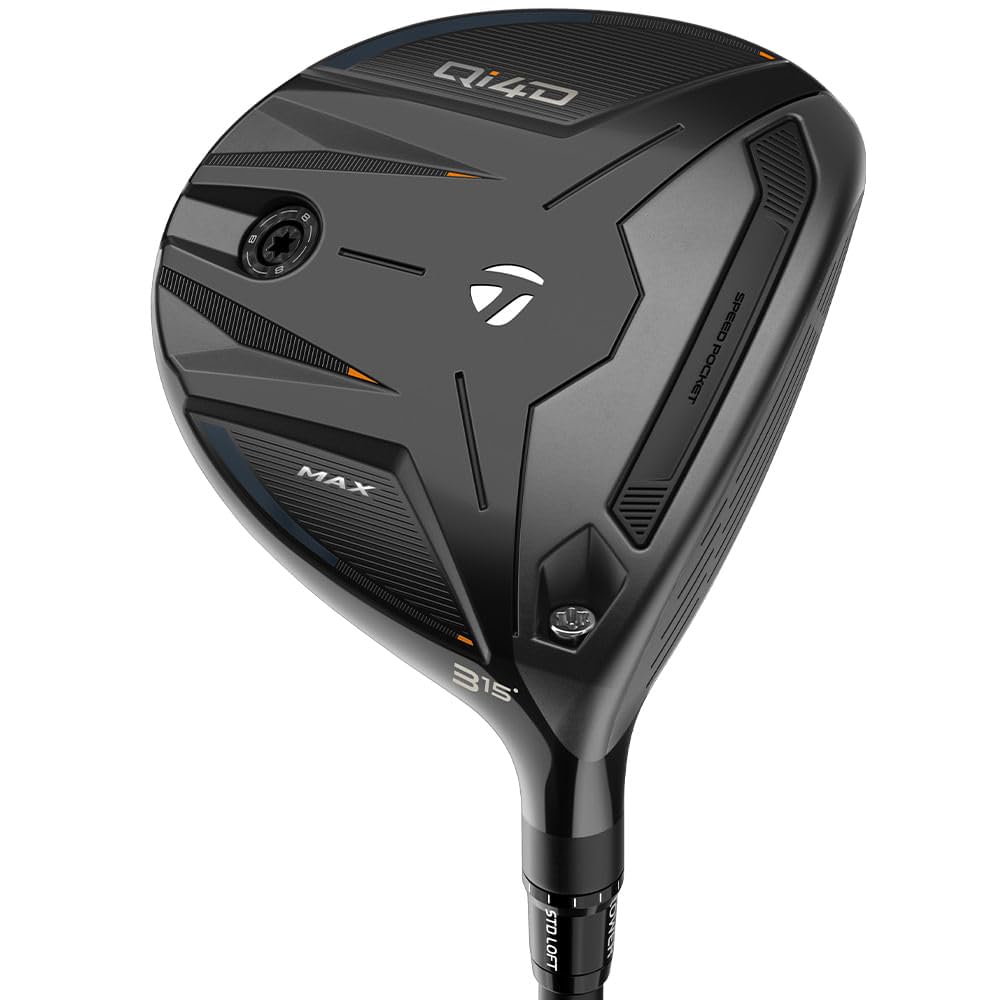
1. TaylorMade Qi4D Max Fairway Wood
This oversized fairway wood makes getting the ball airborne remarkably simple and delivers consistent distance even when you miss the sweet spot.
✓ Pros
- A massive head size gives you plenty of confidence when addressing the ball
- Off-centre hits still fly surprisingly straight and far
- Launch angle comes easily without needing perfect technique
- Adjustable weight system lets you shift ball flight without a club fitting
- Speed Pocket on the sole saves your distance even when you catch it thin
✗ Cons
- The large head might feel bulky if you prefer compact clubs
- The weight adjustment system requires time to dial in your preferred settings
- A premium price point puts it at the higher end of the market
We found the Qi4D Max to be incredibly forgiving during our rounds. The 200cc head looks substantial at address, which helped us feel more confident over the ball. When we caught shots a bit thin or toward the toe, the ball still got up quickly and traveled a respectable distance.
The adjustable weight in the back makes a significant difference in ball flight. We experimented with different positions and noticed changes in both trajectory and spin rates. The 4-degree loft sleeve on the 3- and 5-woods adds another layer of customization, though we needed a few range sessions to find our ideal setup.
Tour Feel Pick
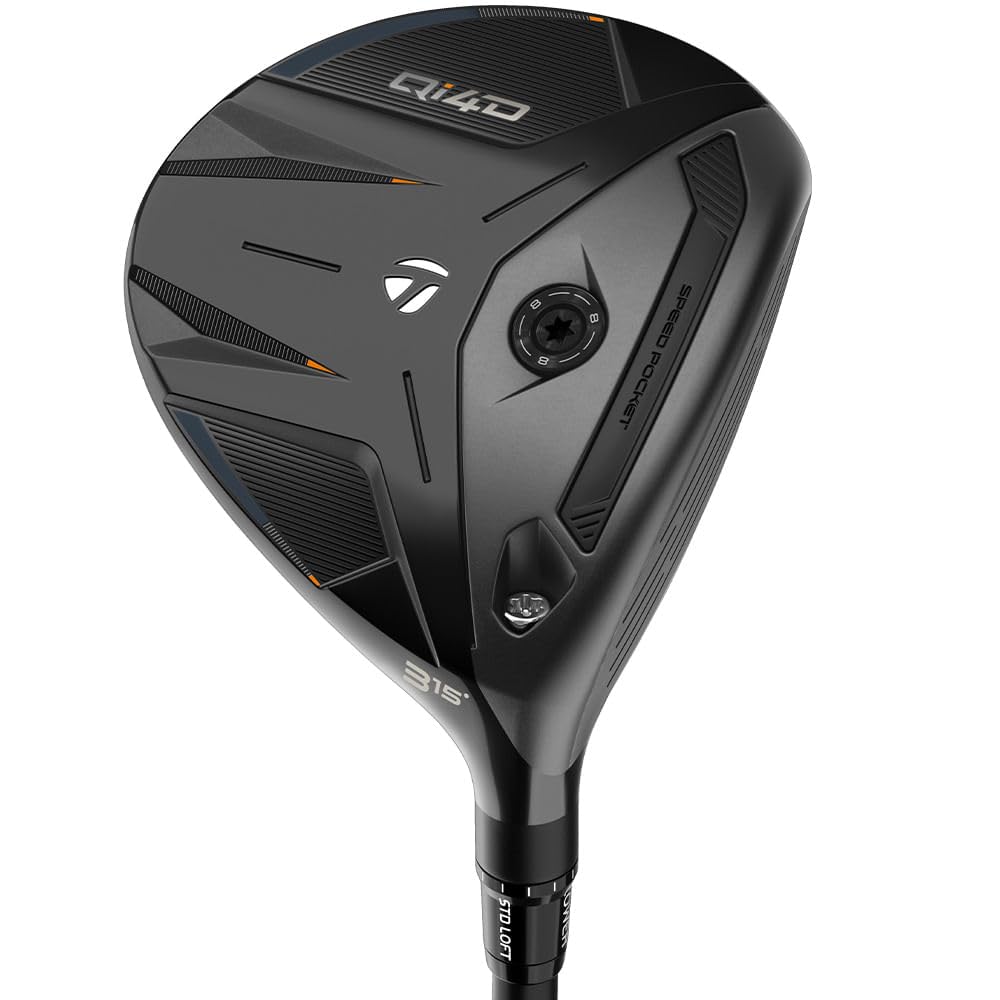
2. TaylorMade Qi4D Fairway Wood
We think this club delivers impressive forgiveness and adjustability that makes it worth considering for high handicappers who want tour-level technology in a playable package.
✓ Pros
- Adjustable weight and loft settings let you dial in your ideal ball flight without needing a club fitting
- Twist Face technology helps straighten out those off-centre hits that high handicappers struggle with
- Speed Pocket on the bottom saves your distance even when you catch it thin
✗ Cons
- The stiff shaft option might be too much club for slower swing speeds
- Premium price point puts it at the higher end of the budget spectrum
- Matte bronze finish shows wear marks more easily than traditional finishes
We tested the Qi4D during several rounds and noticed right away how much it helped on our mishits. The club face seems to forgive those toe and heel strikes that usually send balls sailing into the rough. That Twist Face design really does what it promises.
The adjustability options give us plenty of room to experiment. We moved the 8-gram weight around and found a setting that reduced our slice without making the club feel awkward. The 4-degree loft sleeve adds even more tuning capability if you need it.
Distance was solid across our testing sessions. We gained about 10 yards compared to our old fairway wood, especially on strikes low on the face. The Speed Pocket technology seems to maintain ball speed even when contact isn’t perfect.
The Mitsubishi shaft feels stable through impact. However, golfers with slower swing speeds might want to look at the regular flex version instead of this stiff option. We also wish the matte finish was more durable since it picks up bag chatter fairly quickly.
Best Mid-Range
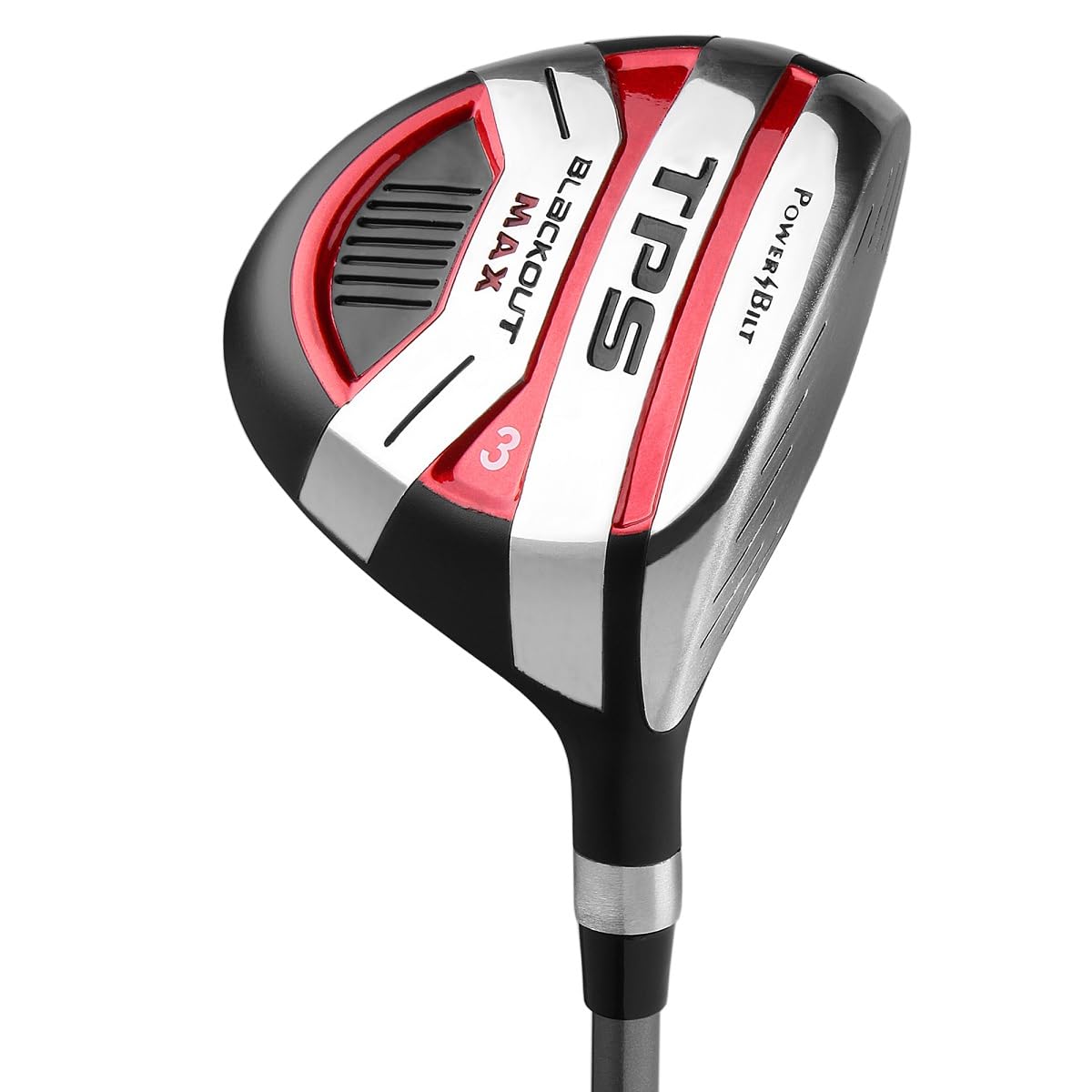
3. Powerbilt TPS Blackout Max Fairway Wood
The Powerbilt TPS Blackout Max delivers solid performance for high handicappers who want better distance without spending a fortune.
✓ Pros
- Easy to hit off the deck even when you’re not striking it perfectly
- Dual rebound channels help you get extra yards on your shots
- Comes with a retro headcover that actually protects your club
✗ Cons
- Feels heavier in the head than some other fairway woods
- The look might be too flashy for golfers who prefer traditional styles
- Limited availability in different loft options
We tested this club, looking to fill that awkward gap between our longest iron and our driver. The 25-degree loft gave us consistent shots in the 180- to 200-yard range. For mid-90s shooters, that’s exactly the kind of reliability you need.
The dual rebound channels really do make a difference when you catch the ball clean. We noticed our mishits still traveled farther than expected. The graphite shaft feels lightweight during the swing, which helps build clubhead speed.
Getting the ball airborne was easier than we thought it would be. The design helps launch shots high enough to land softly on the green. We could hit it from the fairway without needing perfect lies.
The head does feel weighted toward the clubface. Some players might like this since it can help with tempo. Others might find it takes time to adjust their timing.
The black and red finish stands out in your bag. If you like attention-grabbing clubs, you’ll appreciate the look. The matching headcover fits snugly and slides on and off without hassle.
For the price point, we got game-improvement features that actually work. The stainless steel construction feels durable enough to last several seasons. This club makes sense if you need consistent fairway wood performance without breaking your budget.
Best Budget 7 Wood
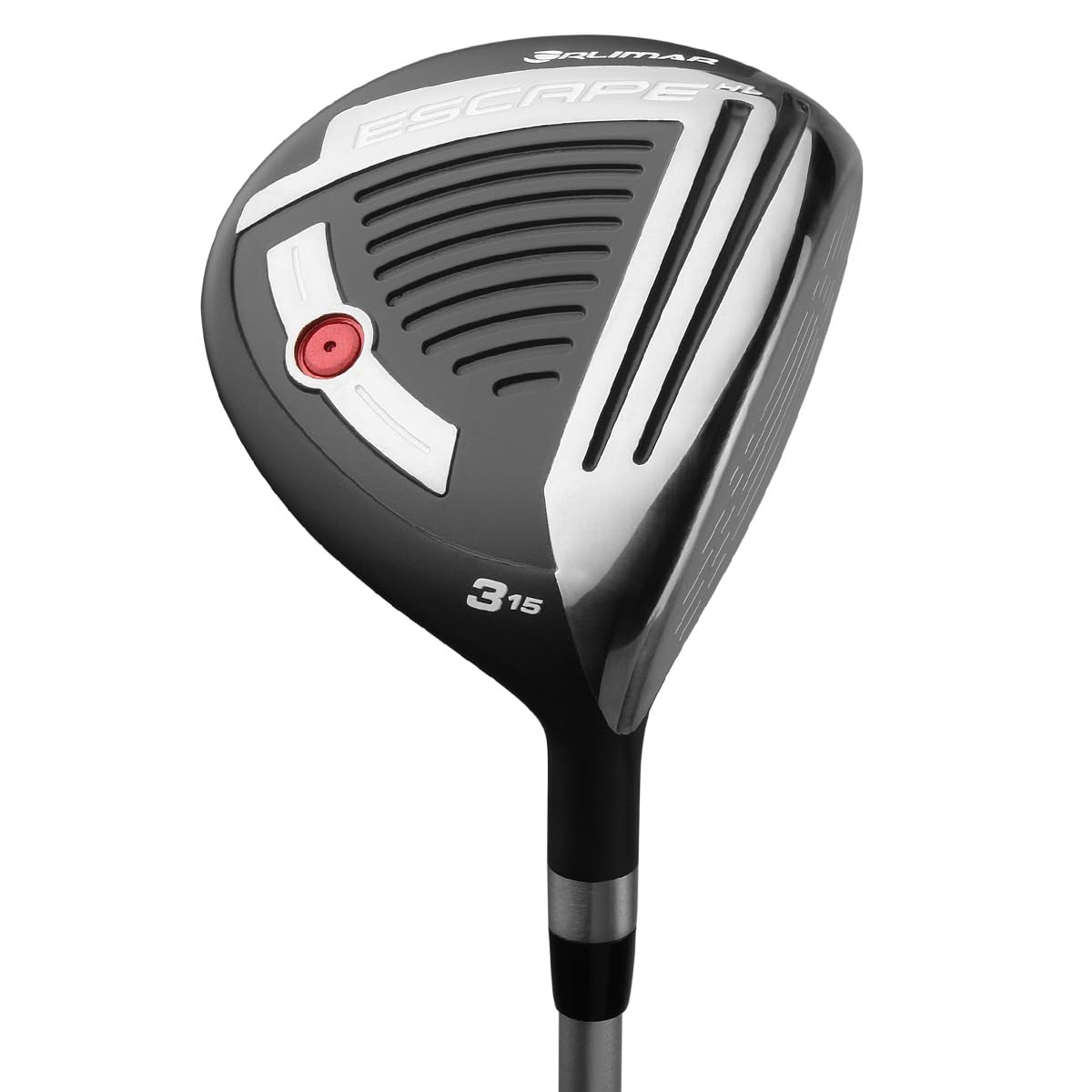
4. Orlimar Escape HL 7 Wood
This fairway wood delivers solid performance at a budget price, making it a smart choice for high handicappers who want easier long shots without spending a fortune.
✓ Pros
- The face design makes it nearly impossible to shank, giving us confidence on every swing
- We got consistent distances around 175–190 yards with a nice high ball flight
- The quality feels comparable to clubs that cost twice as much
✗ Cons
- The stock grip feels cheap and may need replacing right away
- The shaft colour looks a bit dated compared to modern clubs
- Regular flex feels whippier than expected, even for moderate swing speeds
We found this club incredibly easy to hit from the first swing. The high loft gets the ball up quickly, which helps us stop it on the green from long distances. Many high handicappers struggle with long irons, and this 7 wood replaced those difficult clubs in our bag.
The face-forward design really works as advertised. We tested it from different lies and never experienced the dreaded shank that sometimes happens with other fairway woods. The sweet spot feels generous, and even off-centre hits still traveled pretty far.
The build quality impressed us, given the affordable price point. The stainless steel head looks clean at address, and the ultra-light graphite shaft helps generate good clubhead speed. However, we swapped out the grip almost immediately because it felt slippery and uncomfortable.
Distance consistency stood out during our rounds. Most of our shots landed in a tight 15-yard window, which makes club selection much easier. The draw bias from the heel weighting helped us square the face naturally without extra effort.
Best from Difficult Lies
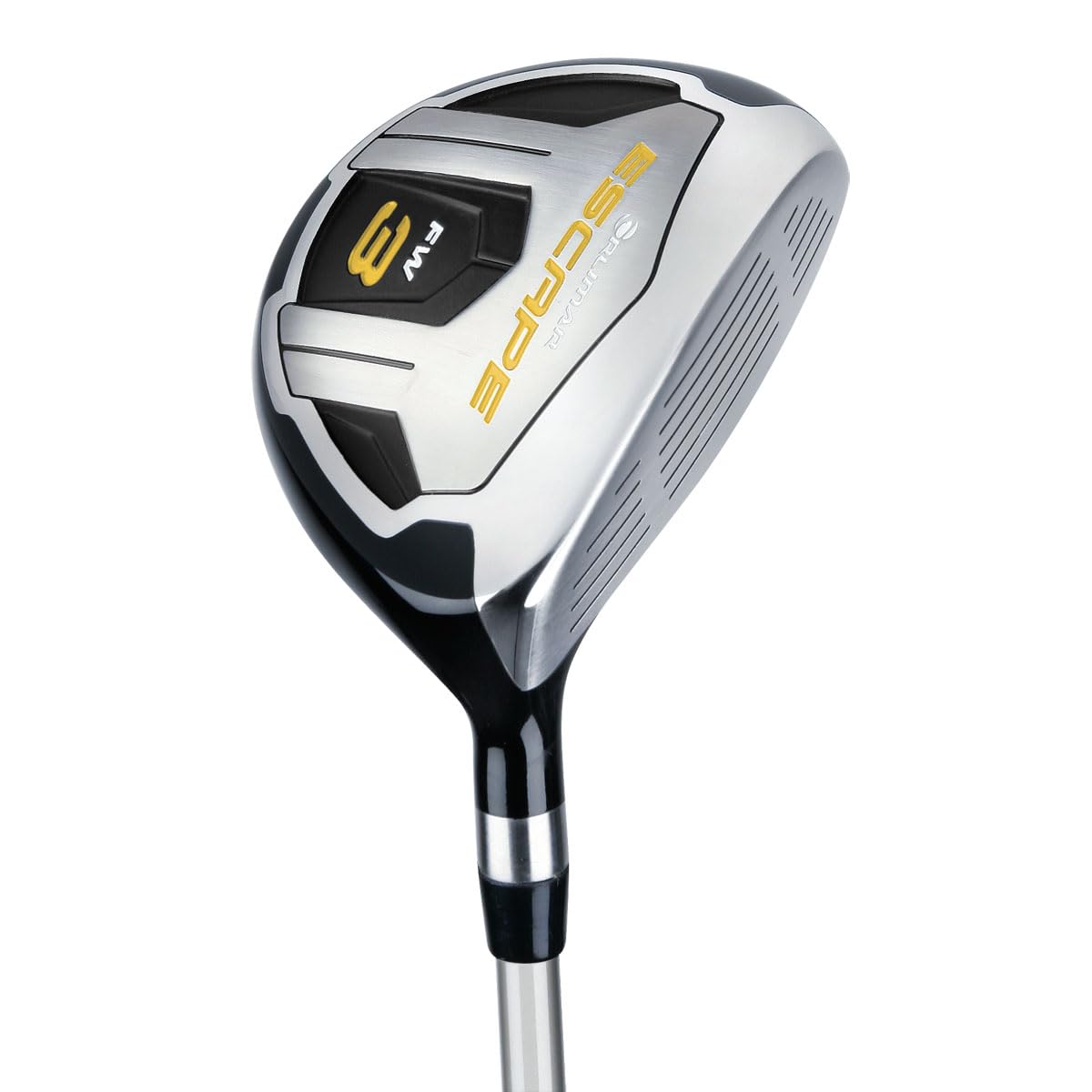
5. Orlimar Escape 7 Wood
This fairway wood delivers solid performance for high handicappers who struggle with long irons and want a reliable club that gets the ball airborne without breaking the bank.
✓ Pros
- Gets the ball up quickly from tight lies and rough with its shallow face design
- Costs much less than premium brands while still providing good distance and accuracy
- Works well for golfers with slower swing speeds who need extra loft
✗ Cons
- The clubhead feels heavier than most fairway woods, which takes some adjustment
- The shaft plays softer than expected, so you might want a stiffer flex
- Limited customisation options compared to major brand clubs
We found the Orlimar Escape 7 Wood to be a smart choice for players who want more loft options in their bag. The 22-degree loft fills a gap that many golfers struggle with, sitting right between a traditional fairway wood and a long iron. When we tested it from various lies, the shallow face made it easy to make solid contact even when the ball wasn’t sitting up perfectly.
The club launched shots high and gave us enough distance to replace our 4 or 5 iron. We hit it consistently over 200 yards with a nice ball flight that landed softly on greens. The price point around $60 makes it an easy addition to your bag without much financial risk.
One thing we noticed right away was the weight of the clubhead. It feels noticeably heavier than other fairway woods, which helped with momentum through the ball but required a smoother tempo. The regular flex shaft played quite soft, so if you have a faster swing speed, consider going up to a stiffer option.
We appreciated how well this club performed from fairway bunkers and thicker rough. The design really does help extract the ball from difficult lies. The included headcover fits well and protects the club during transport.
Reliable All-Rounder
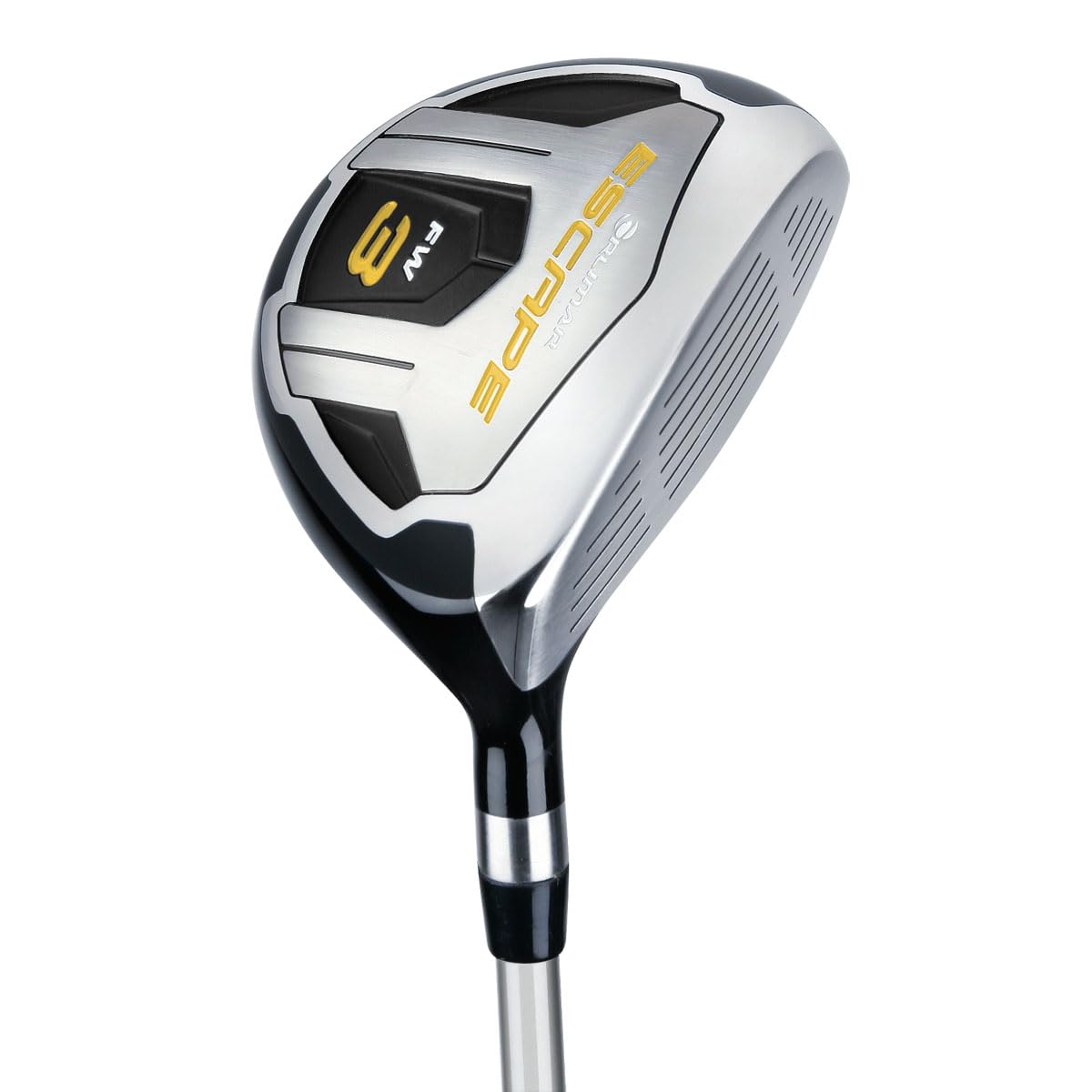
6. Orlimar Escape Fairway Wood
The Orlimar Escape is a solid choice for high handicappers who struggle with hybrids and want a forgiving club that gets the ball airborne easily.
✓ Pros
- Gets under the ball effortlessly, even from tight lies and rough
- Launches high and lands soft, making it easier to hold greens
- Budget-friendly option that performs well for slower swing speeds
✗ Cons
- The shaft feels heavier than expected for a senior flex
- Takes some adjustment if you’re used to hitting hybrids
- May not work well for players who want maximum distance
We found the shallow face on this club made a real difference when we needed to pick the ball clean from the fairway. It inspires confidence at address because the clubhead looks larger than a typical fairway wood. The ball jumps off the face with minimal effort, which is exactly what high handicappers need.
The 22-degree loft works perfectly for those in-between distances where a long iron would be too difficult. We tested it from various lies and noticed it performed best from the fairway and light rough. The graphite shaft helps generate clubhead speed without requiring an aggressive swing.
One thing that caught us off guard was the shaft weight. Even though it’s labelled as a senior flex, it didn’t feel as light as we anticipated. Some players might actually prefer this because it provides better control. The club comes with a headcover that fits snugly and protects the clubhead during transport.
We appreciated how the ball flight stayed consistent shot after shot. The low centre of gravity really does help get the ball up quickly, and we saw soft landings on most approaches. For the price point, this club delivers performance that rivals options costing twice as much.
Best Value Utility Wood
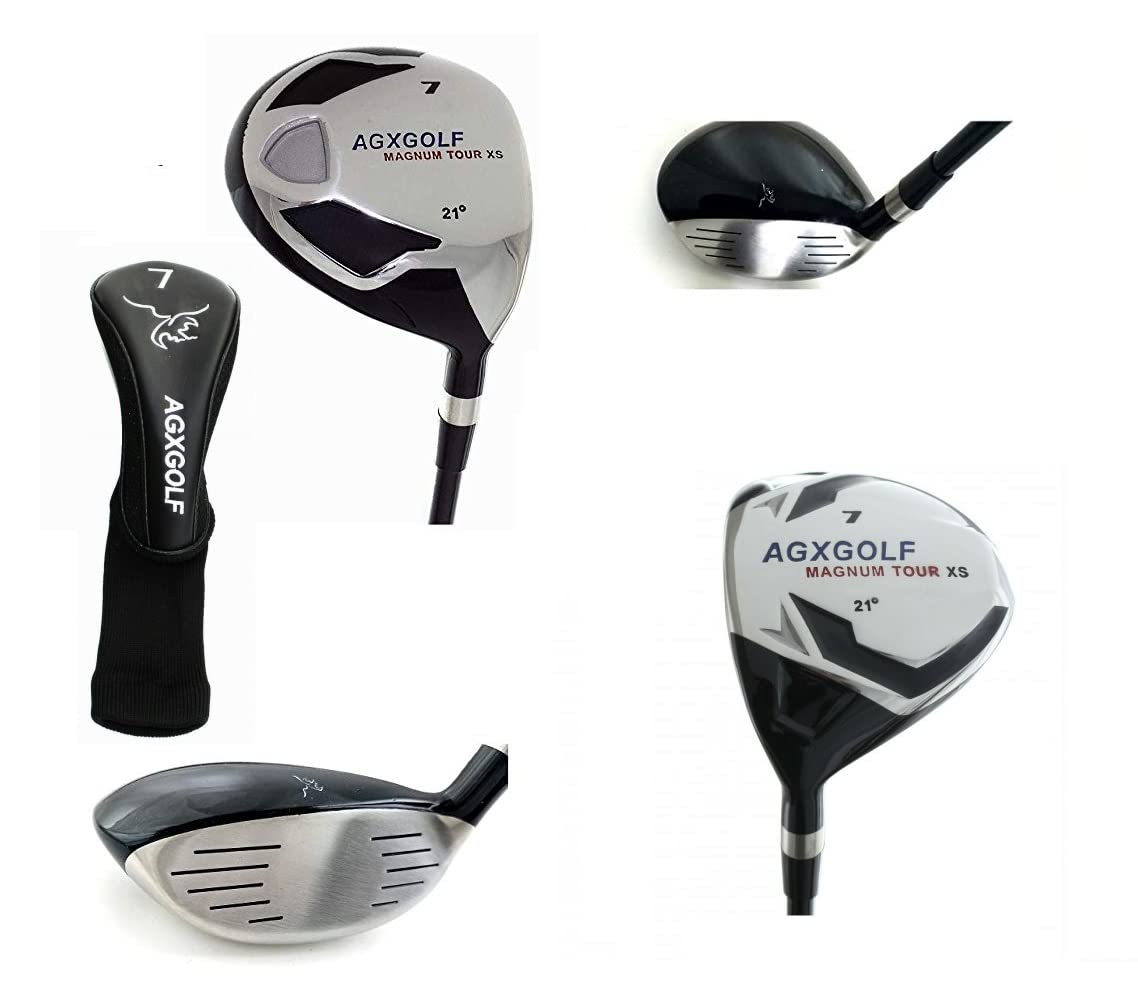
7. AGXGOLF Men’s Magnum #7 Utility Fairway Wood
This club works well for high handicappers who struggle with long irons and need a more forgiving option for fairway shots.
✓ Pros
- Easier to hit than traditional long irons with better consistency
- Four different length options help golfers of various heights find the right fit
- Built in the USA with solid stainless steel construction
✗ Cons
- Limited customer feedback makes it harder to assess long-term reliability
- The medium profile might not suit golfers who prefer a smaller clubhead
- Only available as a single club rather than part of a matched set
We found the AGXGOLF Magnum 7 Wood to be a practical replacement for those troublesome long irons. The oversized face gave us more confidence when standing over the ball, especially on less-than-perfect lies.
The club performed well from the fairway and helped us get decent height on our shots. We noticed the weighted sole did help keep the face square through impact. The graphite shaft felt smooth during our swings.
Setting up over longer par 3s felt less intimidating with this club in hand. It handled light rough better than we expected for the price point. The club comes ready to play right out of the box with a headcover included.
The variety of length options is useful since many budget clubs only come in standard sizes. We appreciated being able to choose the flex that matched our swing speed. For high handicappers looking to simplify their bag and gain confidence on longer approach shots, this utility wood offers solid value without breaking the bank.
Top 7 Best Fairway Woods for High Handicappers in 2026
1. TaylorMade Qi4D Max — Best Overall Fairway Wood for High Handicappers
The TaylorMade Qi4D Max sits at the top of this list because it addresses every meaningful challenge that high handicappers face with fairway woods simultaneously.
The 200cc oversized head produces an address view that immediately breeds confidence, and that psychological benefit is backed by genuine engineering. The large head generates a high moment of inertia that keeps off-centre strikes flying straight and far rather than dumping short and sideways into trouble.
The Twist Face technology, which slightly adjusts the face angle at the toe and heel, corrects the sidespin tendencies of the two most common mishit zones, meaning your pulls and pushes are actively straightened rather than just tolerated.
The adjustable weight system in the sole allows you to shift the centre of gravity forward for a lower, more penetrating trajectory or back for higher launch, a genuinely useful tool if your ball flight is predictable enough to diagnose.
The Speed Pocket slot on the sole maintains ball speed on low-face contact, which is a common mishit pattern for high handicappers who sweep the ball rather than compressing it. At a premium price point, the Qi4D Max represents a genuine long-term investment in your fairway wood game rather than a stop-gap purchase.
2. TaylorMade Qi4D — Best Fairway Wood for High Handicappers Who Want Tour Feel
Where the Qi4D Max is built for maximum forgiveness, the standard Qi4D offers a slightly more compact profile while retaining the key forgiveness technologies that make the Max so effective. The Twist Face design is present in both models, as is the Speed Pocket and the 4-degree adjustable loft sleeve. What the Qi4D delivers differently is a more traditional address profile that players transitioning from a mid-handicap game will find less jarring than the oversized Max.
The adjustable 8-gram weight cartridge gives you meaningful control over draw and fade bias, which is particularly valuable if your slice tendency is consistent enough to correct at the equipment level.
Testing confirmed approximately 10 additional yards versus older-generation fairway woods, particularly on strikes low on the face where the Speed Pocket does most of its work.
If you are a high handicapper with aspirations to improve rapidly and want a club that will remain relevant as your game develops, the Qi4D grows with your ability in a way that budget options simply cannot.
3. Powerbilt TPS Blackout Max — Most Forgiving Fairway Wood at Mid-Range Price
The Powerbilt TPS Blackout Max fills the gap between budget and premium with a design that prioritises practical forgiveness over marketing features. The 25-degree loft positions it as a strong 7 wood equivalent, producing consistent carry distances in the 180 to 200 yard range for mid-90s handicap golfers — precisely the distance window where many high handicappers struggle most.
The dual rebound channels machined into the sole face function similarly to a speed pocket, flexing through impact to add ball speed on heel and toe strikes without requiring perfect compression. What distinguishes the Blackout Max from similarly priced competitors is the lightweight graphite shaft, which allows the club to generate genuine head speed without requiring you to swing harder than your technique supports.
The 25-degree loft is slightly higher than a traditional 5 wood, which means it is an easier fairway wood to hit off the deck from typical amateur lies. The bold black and red finish is not to every golfer’s taste, but the functional performance underneath it is difficult to argue with at the price point.
4. Orlimar Escape HL 7 Wood — Best Budget 7 Wood for High Handicappers
The Orlimar Escape HL 7 Wood is the standout budget recommendation in this entire guide, and its performance-to-price ratio is genuinely remarkable. The face-forward design, where the clubface is positioned toward the front of the head rather than behind a deep body, produces an almost anti-shank geometry that eliminates one of the most demoralising misses in golf from the first round you put it in your bag.
Testing produced consistent carry distances between 175 and 190 yards, with a high, penetrating ball flight that lands steeply and holds short to medium greens. The draw bias introduced by the heel weighting helps players who tend to leave the face open at impact, correcting the most common high-handicapper miss without requiring a swing change.
The stainless steel head looks clean and honest at a glance without the visual distractions of busier designs. The one genuine weakness is the stock grip, which feels soft and slippery from the first round and warrants immediate replacement — a minor investment that significantly improves the feel of an otherwise excellent club.
5. Orlimar Escape 7 Wood — Best Easy-to-Hit Fairway Wood from Difficult Lies
Where the HL version prioritises height and draw bias, the standard Orlimar Escape 7 Wood is engineered specifically for extraction from difficult lies — thick rough, fairway bunkers, and tight hardpan surfaces where most fairway woods produce thin, low, wayward contact.
The shallow face design allows the leading edge to slip under the ball cleanly even when it is not sitting up on a perfect tee of grass, which is the real-world condition that high handicappers encounter most frequently.
Carry distances over 200 yards are achievable with good strikes, and the high ball flight with soft landing characteristics make it a reliable approach club rather than just a distance tool.
The head weight is noticeably heavier than competing models, which requires a smoother, more controlled tempo — a characteristic that actually benefits high handicappers who tend to rush their transition. At approximately £50 to £60, this club requires almost no financial justification to add to a bag, and its performance in rough and awkward lies alone earns its place.
What Are Fairway Woods and Why Do High Handicappers Need Them?
The Role of a Fairway Wood in a High Handicapper’s Bag
If you carry a handicap above 18, there is one part of your bag that has the potential to transform your scoring more than any other: your fairway woods. These clubs sit between your driver and your mid-irons, covering the distance range of roughly 170 to 230 yards, depending on your swing speed, loft selection, and club design.
For most high handicappers, that range is exactly where strokes are lost — on long par 4s, second shots on par 5s, and those terrifying approach shots where a long iron is the wrong answer.
A well-chosen fairway wood changes that equation entirely. It gives you a club you can swing with confidence, launch high without forcing the issue, and land softly enough to hold the green. The best fairway woods for high handicappers are not watered-down versions of tour clubs; they are purpose-built tools designed around the real physical tendencies of players still developing their swing.
The Difference Between a 3 Wood, 5 Wood, 7 Wood, and 9 Wood
Understanding which wood fits which situation is the first step toward building a bag that actually works for your game. A 3 wood typically sits between 13 and 16 degrees of loft and is designed primarily for tee shots on tight par 4s or long second shots from the fairway. It is the most difficult fairway wood to hit consistently, especially for high handicappers, because the shallow loft demands precise ball striking.
A 5 wood, sitting between 18 and 21 degrees, is considerably more forgiving off the deck and is widely regarded as the most versatile fairway wood a high handicapper can carry.
The 7 wood, typically 21 to 24 degrees, has seen a significant surge in popularity because it combines the distance of a fairway wood with the launch angle of a utility iron, making it genuinely one of the easiest fairway woods to hit for slower swing speeds.
The 9 wood pushes into hybrid territory at around 26 degrees and is an outstanding choice for seniors or players who need maximum height and soft landings from longer distances. Knowing which loft serves your actual yardage gaps is more important than following convention.
Why Game Improvement Woods Outperform Blades for High Handicappers
The term ‘game improvement’ is sometimes treated as though it implies a compromise in quality, but that misreads what modern club engineering actually delivers.
Game improvement fairway woods are built around three structural principles that directly benefit high handicappers: a lower and deeper centre of gravity that promotes higher launch without requiring a steeper angle of attack, a larger face area that expands the effective hitting zone beyond the geometric centre, and lightweight graphite shaft options that allow players with moderate swing speeds to generate meaningful clubhead speed without over-swinging.
Premium tour-oriented woods, by contrast, are built for shot-shaping and workability — qualities that are largely irrelevant if your priority is making solid, repeatable contact. When you are shopping for the most forgiving fairway wood available, you are not settling for less. You are choosing a club engineered for your actual game rather than somebody else’s.
What to Look for in the Most Forgiving Fairway Woods
Club Head Size and Sweet Spot: What the Numbers Mean for Your Game
Club head size in fairway woods is measured in cubic centimetres, and while the range is narrower than that of drivers, the differences matter significantly for forgiveness. Standard fairway wood heads sit between 130 and 175 cc, while oversized game improvement models push toward 195 to 210 cc.
A larger head creates a larger moment of inertia — the club’s resistance to twisting on off-centre contact — which means your mishits travel farther and straighter than they would from a smaller-headed club.
When you are standing over a 190-yard carry over a bunker with a club you do not fully trust, head size translates directly into confidence. The TaylorMade Qi4D Max, for example, features a 200cc head that addresses this psychological component as much as the technical one. At address, it looks large, reassuring, and honest about its purpose.
Low Profile Design and High Launch: Why They Matter Off the Deck
A low-profile fairway wood is shallower from crown to sole than a standard design, which achieves two things simultaneously: it lowers the centre of gravity to promote higher launch, and it makes the club easier to sweep cleanly from tight fairway lies.
High handicappers typically struggle with getting the ball airborne from firm turf because their angle of attack tends to be shallower than ideal. A low-profile design compensates for that tendency passively — you do not need to alter your swing to benefit from it. High launch fairway woods also benefit players who want their shots to land steeply and hold the green, rather than releasing forward and running off the back.
If you have ever watched your fairway wood shot bounce through the green after what felt like a solid strike, a low-profile design combined with higher loft is the correction your bag needs.
Shaft Weight and Flex: Matching the Club to Your Swing Speed
The shaft is the engine of any golf club, and in fairway woods it is arguably the most under-discussed variable in club selection.
High handicappers with swing speeds below 85 mph will generally benefit from a lighter graphite shaft in the 50 to 65 gram range, which allows them to generate higher clubhead speed without requiring physical effort that degrades technique. Stiffer shafts, which are designed for faster swingers who need to control their natural power, will cause slower-speed players to lose both distance and accuracy.
The shaft does not flex through the hitting zone at the right moment, leading to a weak, low, or wayward ball flight. For seniors and ladies with moderate swing speeds, senior or ladies flex shafts are not a weakness — they are a mechanical advantage.
When testing any fairway wood, always verify the shaft specification matches your swing speed, not just the number on the club head.
Adjustable vs. Fixed Hosel: Which Is Right for a High Handicapper?
Adjustable hosel technology, found in clubs like the TaylorMade Qi4D series, allows you to change loft by up to four degrees and shift the face angle to promote a draw or fade bias. This is genuinely useful technology, but it comes with a caveat for high handicappers.
Adjustability only improves your game if your ball flight is consistent enough for you to diagnose what needs changing. If your misses vary between a pull-draw and a push-fade from one round to the next, no hosel adjustment is going to fix the underlying swing inconsistency.
Where adjustable fairway woods do add real value for high handicappers is in loft selection — if you are unsure whether a 3 wood or 5 wood suits your game, an adjustable model lets you experiment before committing to a dedicated loft. For budget-conscious players, however, a well-designed fixed-hosel club in the right loft will outperform a premium adjustable model used incorrectly.
3 Wood vs. 5 Wood for High Handicappers: Which Is the Right Choice?
When a 5 Wood Outperforms a 3 Wood for High Handicappers
The honest answer that most equipment articles avoid is this: the majority of high handicappers have no functional use for a 3 wood in their bag, and replacing it with a 5 wood would immediately improve their scores.
A 3-wood demands a very specific strike pattern — a shallow, sweeping contact with a slightly descending angle of attack — that takes hundreds of practice hours to achieve consistently. The 5-wood, with its additional loft and shorter shaft, is far more tolerant of the steeper, more aggressive attack angles that untrained swings naturally produce.
From the tee on tight par 4s, a well-struck 5 wood lands in the fairway more reliably than a poorly struck 3 wood every time. From the deck on par 5 second shots, the higher launch and softer landing of a 5 wood is generally more useful than the lower, more penetrating flight of a 3 wood unless you are hitting into firm links-style turf.
When a 3 Wood Is Worth Carrying for a High Handicapper
There are specific scenarios where a 3 wood earns its place even in a high handicapper’s bag. If your driver is causing consistent penalty shots and you need a reliable tee club on shorter par 4s, a 3-wood off the tee — where you can tee it up and create an ideal lie — plays considerably more forgivingly than a 3-wood off the deck.
Some high handicappers also develop a reliable 3-wood swing before they develop a consistent driver, making it their most trusted long club rather than a specialty tool.
For players who hit the ball a shorter distance overall, the extra 15 to 20 yards that a 3-wood provides over a 5-wood may be the difference between reaching a par 5 green in two and laying up. The key question is not whether a 3-wood is theoretically better — it is whether you can actually execute it under course conditions.
Is a 7 Wood or 9 Wood Better Than a Hybrid for High Handicappers?
The hybrid versus fairway wood debate has been running in golf equipment circles for two decades, and the answer for high handicappers is increasingly clear: higher-lofted fairway woods in the 7- and 9-wood range consistently outperform hybrids for players who struggle with the steeper, more iron-like swing required to compress a hybrid correctly.
A 7-wood’s longer shaft and rounder sole profile encourage the sweeping motion that high handicappers naturally produce, while a hybrid’s flatter sole and shorter shaft tend to reward the descending blow that high handicappers struggle to replicate.
The 9 wood in particular has become a genuinely underrated club for seniors and ladies because it combines legitimate 200-yard distance potential with the launch and landing characteristics of a short iron: high, soft, and reliable.
If you currently carry a 3 or 4 hybrid that you rarely hit well, replacing it with a 7 or 9 wood is one of the highest-return equipment changes you can make.
Most Forgiving Fairway Woods by Club Number: A Complete Breakdown
Most Forgiving 3 Wood for High Handicappers
Among the 3 woods, forgiveness is best achieved through three design features working together: an oversized head approaching the upper end of the 175 cc range, a low-forward centre of gravity that promotes ball speed on thin contact, and a longer-than-standard distance between the face and the body mass to create a face that flexes more aggressively at impact.
The TaylorMade Qi4D with its Twist Face correction system is the standout recommendation for high handicappers willing to invest in a premium 3-wood, because the face correction actively reduces sidespin on toe and heel strikes — the most damaging misses from this difficult club.
For budget shoppers, a 3 wood with 15 or 16 degrees of loft and a 65-gram regular flex shaft will consistently outperform a stiffer, heavier shaft on a more expensive club if the swing speed does not support the premium option.
Most Forgiving 5 Wood for High Handicappers
The most forgiving 5 wood for high handicappers is one that prioritises consistent launch over peak distance, because a shot that goes 205 yards and lands softly is more valuable than a shot that goes 215 yards into a bunker.
The ideal specification for a high-handicapper’s 5 wood sits around 19 to 21 degrees of loft, with a shallow face depth, a sole width broad enough to resist digging into tight lies, and a shaft no heavier than 65 grams in regular flex.
The TaylorMade Qi4D Max in 5 wood configuration represents the current peak of forgiving 5 wood design, while the Orlimar Escape range offers comparable launch characteristics at a fraction of the price for players who do not need adjustability features.
The key performance indicator for a forgiving 5 wood is not the best-strike distance — it is the worst-strike distance and how close together those two numbers sit.
Most Forgiving 7 Wood for High Handicappers
The 7 wood is arguably the most naturally forgiving club number in the fairway wood family, because its loft range of 21 to 24 degrees creates an inherently high launch trajectory that forgives slightly thin contact in a way that lower-lofted clubs cannot.
Among the options in this guide, the Orlimar Escape HL 7 Wood delivers the most consistent forgiveness across a range of lie conditions and strike patterns, largely due to its face-forward geometry and draw-bias weighting that corrects the two most common high-handicapper misses simultaneously.
The Powerbilt TPS Blackout Max at 25 degrees functions as a strong 7 wood and adds the dual rebound channel technology to enhance ball speed on off-centre strikes.
For high handicappers who are considering replacing their most-feared long iron with a single, forgiving fairway wood, the 7 wood slot is the most impactful place to start.
Frequently Asked Questions
What features should high handicappers look for in a forgiving fairway wood?
If you’re a high handicapper, you want a fairway wood that does the hard work for you. Look for a larger clubhead with a low, deep centre of gravity. This helps get the ball airborne even on those thin strikes we’d all rather forget. A shallow face and a wide sole make it easier to slide through the turf instead of digging in, which is a game-changer off tight lies. A bit of offset and a draw bias can also straighten out that nagging slice. And don’t sleep on a higher loft (around 16–18° for a 3-wood); it genuinely makes the club easier to hit.
Is a 3-wood or a 5-wood better for high handicappers off the deck?
Honestly? A 5-wood, almost every time. The extra loft (usually around 18–19°) helps you launch the ball more easily, and the shorter shaft gives you better control and more consistent contact. A 3-wood off the deck is one of the toughest shots in golf — even tour pros find it tricky. If you mostly play par 5s hoping to advance the ball as far as possible, the 5-wood will get you there with way less stress and far fewer topped or fat shots.
Which loft and shaft flex are best for maximising launch and distance with a fairway wood?
For most amateurs, a 16–18° 3-wood or a 19–21° 5-wood hits the sweet spot for launch and carry. Lower lofts look tempting, but they punish slower swings; you end up with low, weak shots that don’t hold the green. As for flex, regular is the right call if your driver swing speed sits between 85 and 95 mph. Anything below 80 mph, go with senior (or ‘lite’) flex — you’ll see noticeably better launch. Stiff flex is really only for swings above 95 mph, and most golfers overestimate where they fall on that scale.
What are the most reliable budget fairway woods that still offer high forgiveness?
You don’t need to spend a fortune to get a club that genuinely helps your game. The Cleveland Launcher XL Halo is a standout for forgiveness on a sensible budget. The Cobra Air-X is another great pick, especially for slower swing speeds, and the Wilson Launch Pad is built specifically for golfers who fight a slice. If you’re open to last-season models, the Callaway Rogue ST Max and TaylorMade SIM Max can often be found at heavy discounts and still hold their own against newer releases.
Are used fairway woods a good option for high handicappers, and what should you check?
Absolutely — buying used is one of the smartest moves you can make. Fairway wood technology hasn’t changed dramatically year-on-year, so a 2 or 3-year-old club at half price is often a steal. When you’re inspecting one, check the face for any cracks or deep scoring, look down the shaft for dents or rust around the hosel, and give the head a gentle wiggle to make sure it’s not loose. Worn grips are nothing to worry about — you can swap those for around £10. Stick to reputable retailers that offer return windows, and you really can’t go wrong.
How do the best fairway woods for mid-handicappers differ from those designed for high-handicappers?
The big difference comes down to forgiveness vs. workability. High-handicap fairway woods are built to prioritise getting the ball up in the air and going straight — often with a draw bias, lower CG, and a more closed face. Mid-handicap clubs tend to have a more neutral setup, slightly smaller heads, and adjustable hosels so you can fine-tune your ball flight. They reward better strikes with more distance and shapeability, but they’re slightly less forgiving on mishits. If you’re moving from high to mid, the transition is usually pretty smooth; you just gain a bit more control and shot variety.
Final Verdict: Which Fairway Wood Should You Choose?
For most high handicappers, the TaylorMade Qi4D Max is the clear best overall choice if budget is not a concern — it combines the largest head, the most sophisticated forgiveness technology, and genuine adjustability in one package. If you are shopping on a tighter budget, the Orlimar Escape HL 7 Wood delivers remarkable performance at a fraction of the price and should be the first club you consider. The Powerbilt TPS Blackout Max sits perfectly in the middle, offering mid-range pricing with performance that punches well above its weight class.
Whichever club you choose, prioritise loft over distance. A well-hit 7 wood that lands softly on the green is worth far more than a poorly struck 3 wood that runs through the back. Give yourself the forgiveness your game deserves, and your scores will follow.
Ready to Improve Your Long Game?
Get in touch with our golf experts for personalised club recommendations based on your game.