
PAGE CONTENTS
ToggleYou can make real short-game progress without leaving home. Practice the right short-game drills in your living room, backyard, or driveway, and you’ll shave strokes faster than chasing longer drives at the range.
These drills focus on putting, chipping, and pitching, so you build the shots that matter most when you’re inside 100 yards of the pin.
There’s a stubborn misconception among amateur golfers that driving distance is the key to lower scores. It isn’t. PGA Tour strokes gained data consistently shows that the difference between a professional and a high-handicap amateur is widest in the short game, not off the tee.
Tour professionals convert up-and-down opportunities at a rate above 55–60%, while the average amateur hovers near 15–25%. That gap accounts for far more strokes per round than any difference in driving distance.
New to golf? Read our guide to know basic golf rules: Basic Golf Rules for Beginners.
Essential Home Short Game Drills
Carpet Putting Track
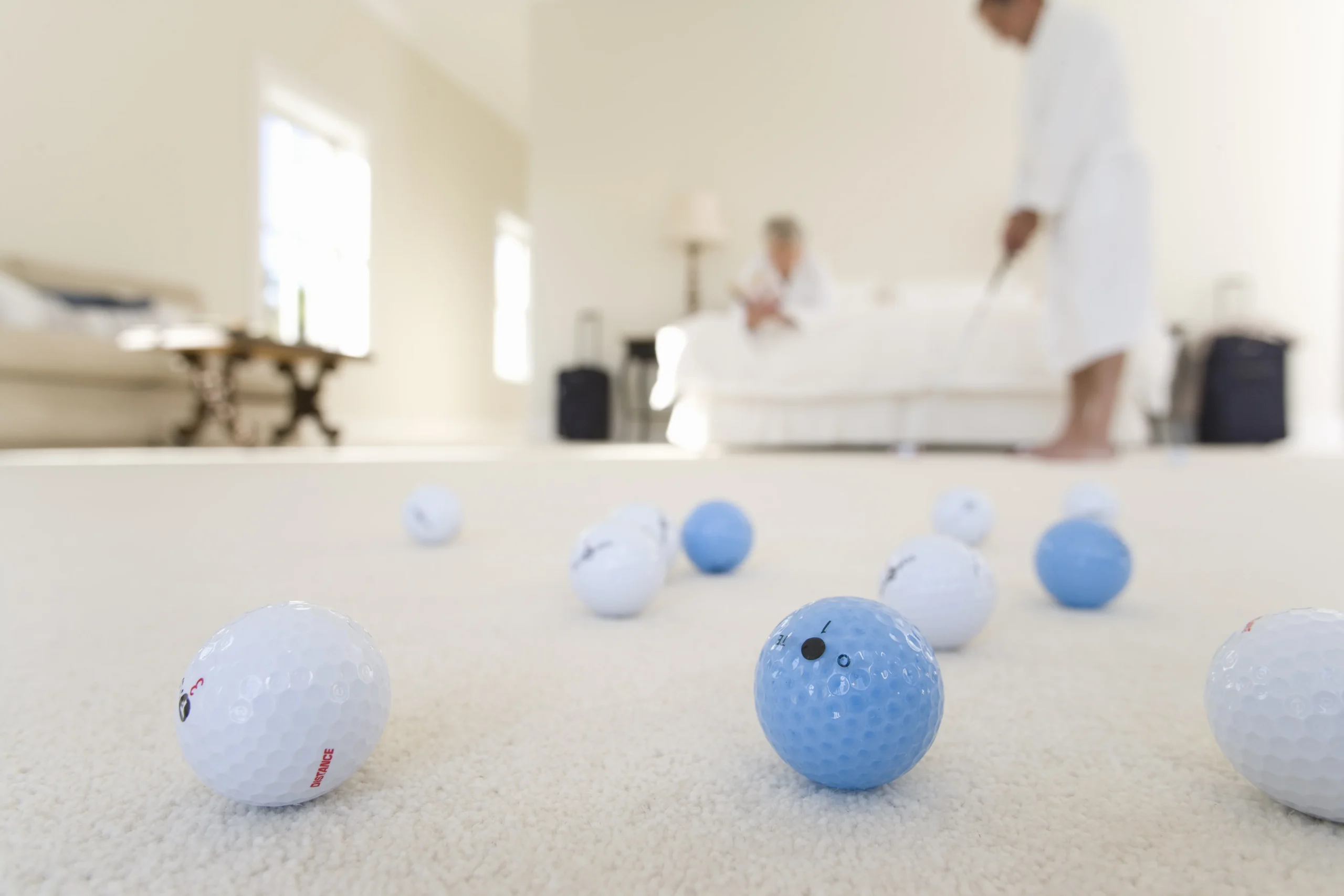
On the carpet there you can set up a narrow alleyway with two alignment sticks or yardsticks. Put them just a bit wider than your putter head so that the face passes through cleanly without hitting the sticks.
Stand at an appropriate distance (begin at 3–6 feet). Try to roll 20 putts on the track with a pendulum stroke. Track Your Progress: Count the successful putts and note your misses. The key is to keep your shoulders still and eyes over the ball.
Change it up with length (3 ft, 6 ft, or 9 ft) and targets (cup, mug, or small target).
Coin Drill Progression
Lying down a coin on the carpet can also act as a visual checkpoint for the ball’s roll. Begin three feet back and roll balls just up to the coin without touching it. Stay for 5 successful moves in a row before going back.
Retract (3, 6, 9 feet). At every distance, log how many putts die over the coin and how many roll past. Vary stroke length and tempo to maintain a steady roll, and catch up to the ball slightly for a true roll.
Distance, number of successes, and tempo notes: simple as that. The coin drill develops distance control and teaches you to avoid bang-bang strokes that leave skids or long lag putts.
Towel Chipping Setup
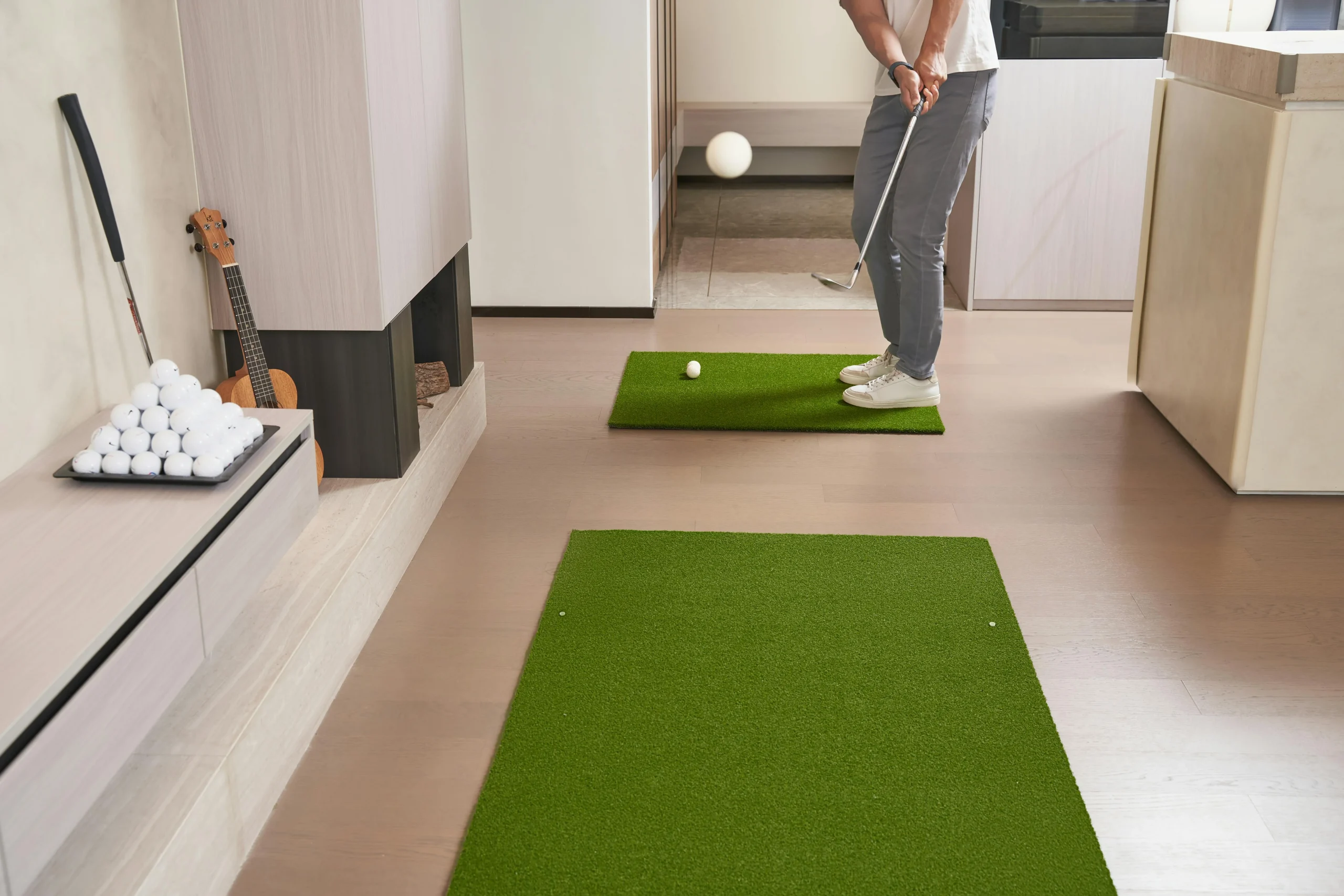
Lay a towel on the grass or a mat to mark a landing zone. From short range, chip balls so they land on the towel and stop there. Use different clubs, a sand wedge, a 9‑iron, and a 7‑iron to change trajectory and roll.
Position the towel at varying distances (5–20 yards). For each distance, hit 10 shots and record how many land on the towel and how many roll off. Focus on controlling the landing spot rather than the full swing length.
Use a basic checklist while you practice: ball position, weight forward, and quiet hands through impact.
Wall Putting Stroke
Stand with your back and shoulders gently against a wall. Maintain your regular putting stance and make short strokes, allowing your shoulders to move but keeping your body steady against the wall.
Hit 20 putts like this to groove a pendulum stroke. The wall teaches you to hold your lower body still and for your shoulders to work in harmony. Vary short (3–6 feet) and long (9 feet) distances to create stroke memory.
Add this to a mirror or phone video to check shoulder rotation and arm movement
On the carpet there you can set up a narrow alleyway with two alignment sticks or yardsticks. Put them just a bit wider than your putter head so that the face passes through cleanly without hitting the sticks.
Stand at an appropriate distance (begin at 3–6 feet). Try to roll 20 putts on the track with a pendulum stroke. Track Your Progress: Count the successful putts and note your misses. The key is to keep your shoulders still and eyes over the ball.
Change it up with length (3 ft, 6 ft, or 9 ft) and targets (cup, mug, or small target).
Coin Drill Progression
Lying down a coin on the carpet can also act as a visual checkpoint for the ball’s roll. Begin three feet back and roll balls just up to the coin without touching it. Stay for 5 successful moves in a row before going back.
Retract (3, 6, 9 feet). At every distance, log how many putts die over the coin and how many roll past. Vary stroke length and tempo to maintain a steady roll, and catch up to the ball slightly for a true roll.
Distance, number of successes, and tempo notes: simple as that. The coin drill develops distance control and teaches you to avoid bang-bang strokes that leave skids or long lag putts.
Towel Chipping Setup
Lay a towel on the grass or a mat to mark a landing zone. From short range, chip balls so they land on the towel and stop there. Use different clubs, a sand wedge, a 9‑iron, and a 7‑iron to change trajectory and roll.
Position the towel at varying distances (5–20 yards). For each distance, hit 10 shots and record how many land on the towel and how many roll off. Focus on controlling the landing spot rather than the full swing length.
Use a basic checklist while you practice: ball position, weight forward, and quiet hands through impact.
Wall Putting Stroke
Stand with your back and shoulders gently against a wall. Maintain your regular putting stance and make short strokes, allowing your shoulders to move but keeping your body steady against the wall.
Hit 20 putts like this to groove a pendulum stroke. The wall teaches you to hold your lower body still and for your shoulders to work in harmony. Vary short (3–6 feet) and long (9 feet) distances to create stroke memory.
Advanced Chipping and Pitching Exercises
One-Handed Chipping Drill
Use this drill to work on wrist and forearm control. Adopt a narrow stance and use your regular chip wedge.
For right-handed players, begin with your left hand only. Take little, controlled swings where you break your wrists a little on the backswing and hold the finish. This makes you sense the clubhead and contact point during impact.
Something simple like solids from three yardages.
Then hit 10 balls from each distance and pay attention to how far the ball rolls out. Repeat with just your right hand. Keep track of which hand has better control and work the less effective hand twice as long in practice.
Speed Ladder Putting
This is a chipping-to-putting rhythm drill that helps you predict roll-out. Place five targets in a line, 3 to 15 feet apart, on a practice mat or a flat lawn.
The first target is the chipping target; then return the ball from that and putt to the next target, then move up the ladder toward the furthest-out target.
Repeat the ladder for five sets, noting missed tries at each distance. Concentrate on a steady tempo and consistent contact. The drill helps you gauge chip-to-putt distance, and it also sharpens the short chip shots that lead to one putt.
Chip and Putt
Set up a mini-course: a landing zone, a green target, and a cup or marker six to twelve feet away. From the landing zone, chip so that the ball lands where you would like it to go and then it has to roll in the cup or finish within a 1-foot circle.
Rate each take: 2 points for a hole-in, 1 point for inside the circle, and 0 for a miss. Play 20 shots and aim to beat your score each time through. This game trains accuracy in the landing zone and reinforces consistent distance control for chip shots.
Pitch Shots Skill Challenge
Place three landing spots at 20, 30, and 40 yards. Take hitting swings with just a pitching wedge or gap wedge. For each target, hit five pitch shots to land inside a 3-yard circle or on the green. Count successful landings.
Trajectory-control work: lower hands for more roll, more loft for soft stops. Track the total distance (carry plus roll) and carry distance to determine how to improve your control over distance. Set u
Ball Speed, Smash Factor, and Energy Transfer
Ball speed, the speed at which the ball leaves the clubface, is the single strongest predictor of carry distance. Two golfers can swing at identical clubhead speeds yet produce very different ball speeds depending on where they strike the face and how they deliver loft.
This efficiency is measured by smash factor, calculated as ball speed divided by clubhead speed. Most amateur golfers produce iron smash factors between 1.33 and 1.45.
A typical 7-iron struck at 85 mph clubhead speed with a smash factor of 1.38 produces roughly 117 mph of ball speed, enough to carry approximately 145–150 yards in standard conditions.
Improving strike quality (finding the center of the face more often) is usually the fastest route to gaining distance without swinging harder.
Launch Angle, Spin Rate, and Descent Angle
Ball speed, the speed at which the ball leaves the clubface, is the single strongest predictor of carry distance. Two golfers can swing at identical clubhead speeds yet produce very different ball speeds depending on where they strike the face and how they deliver loft.
This efficiency is measured by smash factor, calculated as ball speed divided by clubhead speed. Most amateur golfers produce iron smash factors between 1.33 and 1.45.
A typical 7-iron struck at 85 mph clubhead speed with a smash factor of 1.38 produces roughly 117 mph of ball speed, enough to carry approximately 145–150 yards in standard conditions.
Improving strike quality (finding the center of the face more often) is usually the fastest route to gaining distance without swinging harder.
Dynamic Loft vs. Static Loft
Dynamic loft, the actual loft presented to the ball at impact, is the only thing that affects ball flight, not the number on the sole. A player who holds his/her shaft leaning forward at impact effectively reduces loft (delofts the club), creating lower launch, less spin, and more distance.
A wrist-flipper who adds loft turns a 7-iron into an 8-iron in launch characteristics. This is also why the same numbered club in different golfers’ hands can result in wildly different distances and why the angle of attack (the steepness of your downswing) is so important to iron compression and consistency.
How Does the Alignment Stick Putting Drill Improve Stroke Path?
Step-by-step instructions:
- Place two alignment sticks (or two golf clubs) on the ground, parallel to each other, aimed at your target.
- Set the gap between them just barely wider than your putter head, roughly putter-width plus a quarter inch on each side.
- Position your ball in the center of the channel, about midway along the sticks.
- Begin with 50–100 practice strokes without a ball. Focus entirely on swinging the putter back and through the gate without touching either stick. This isolates the stroke path and builds muscle memory before results-oriented thinking takes over.
- Once you can consistently pass through the gate cleanly, introduce a ball. Hit 20–30 putts, resetting your alignment and routine before each one.
What Is the Five-in-a-Row Pressure Putting Drill?
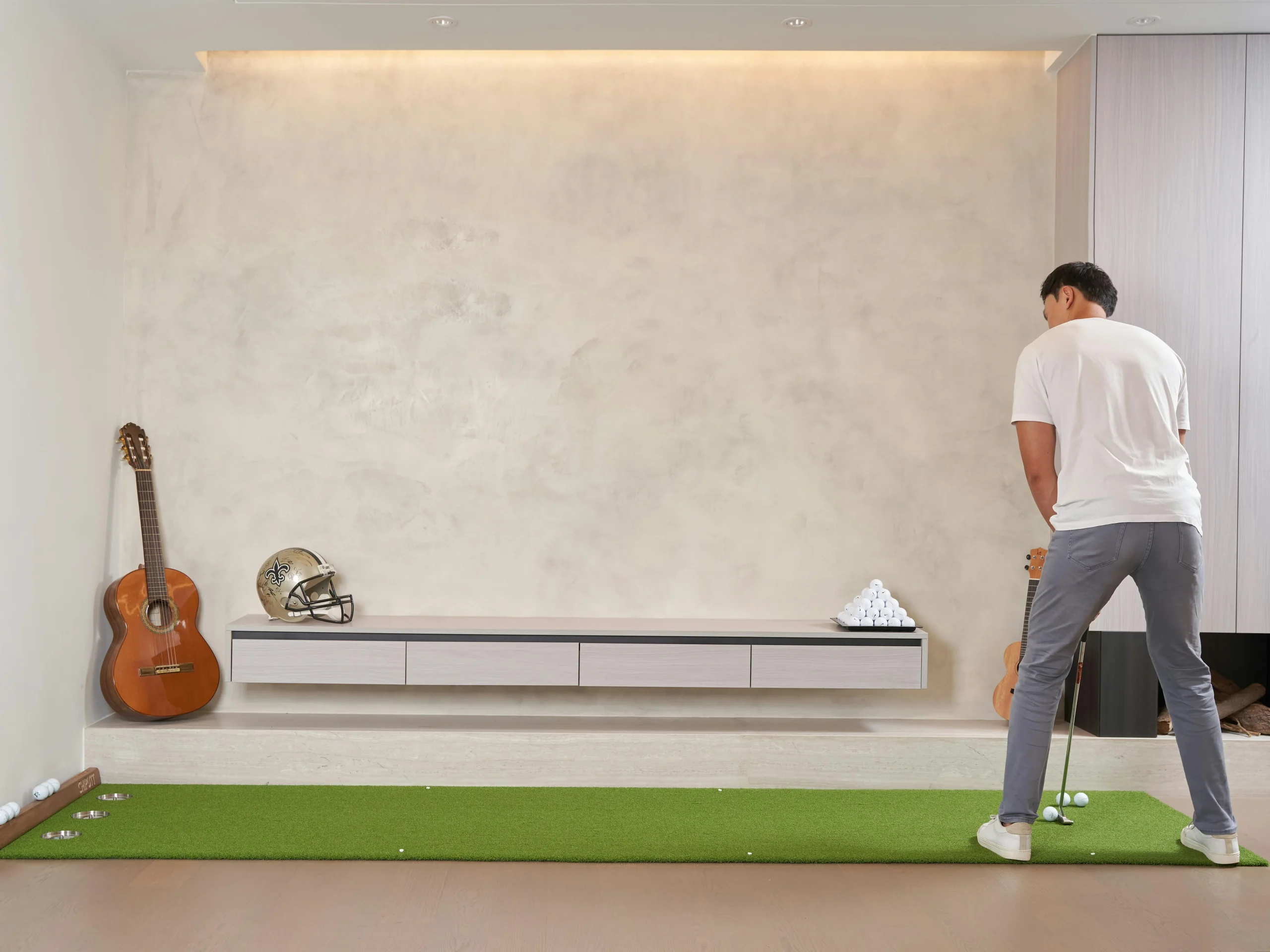
The five-in-a-row drill is a pressurized putting exercise meant to create mental toughness and a consistent pre-putt routine by making five three-footers in a row, with a full restart penalty for any miss.
How the drill works:
Place a ball three feet from your putting cup or target. What is it: Your goal is simple: make five putts in a row. If you miss anywhere along the way, on the first putt or a fourth, your tally resets to zero. You keep going until you make five in a row.
What gives this drill its punch is not the physical aspect. Three-foot putts are straightforward mechanically. There is no external pressure; all of the pressure comes from within.
By your fourth putt, you know a miss negates all your progress. This added pressure you put on yourself is like the sensation of a must-make putt, and it conditions you to simply trust your pre-putt routine rather than trying to steer the ball.
How Do You Practice Distance Control on a Putting Mat?
Distance control is the most undertrained putting skill among amateurs, yet it has an outsized scoring impact; poor speed control is the leading cause of three-putts, which cost the average amateur golfer three to five strokes per round.
The Playing Card Target Drill:
- Place a playing card (or a similarly sized piece of paper) on your putting mat at a set distance, start with six feet.
- Putt toward the card. Your goal is for the ball to stop on the card or to physically touch it.
- Hit ten putts to each distance before moving the card. Cycle through distances of four, six, eight, and ten feet.
- Track your success rate per distance. Aim for 6 out of 10 balls finishing on or touching the card before progressing.
This drill shifts your focus from the hole to lag putting feel. When you aim at a playing card instead of a cup, you stop thinking about making or missing and start paying attention to speed control and energy transfer. The target is small enough to demand precision but forgiving enough to reward progress.
What Is the Best At-Home Drill for Pitch Shot Touch?
The ideal at-home pitch drill employs half swings with a wedge and foam balls to targets in different landing zones, because all the trajectory and spin control that you devoutly practice here translates to those awful 20-to-50 yard shots most amateurs want no hand in.
The Half-Swing Landing Zone Drill:
Place two or three towels or targets at varying distances in your practice area (foam balls compress distances, so indoors 5, 8, and 12 feet will simulate outdoors roughly 20, 35, and 50 yards).
- Using a pitching wedge or sand wedge, make controlled half swings, with hands at roughly hip height on the backswing and hip height on the follow-through.
- Make each foam ball land on a target. Switch between targets after two or three shots.
- Take notice of wrist angles and loft control. A more stable lead wrist creates a lower, more penetrating flight. Releasing a little softer increases height and loft.
- Pay attention to wrist control and loft management. A firmer lead wrist produces a lower, more penetrating flight. A softer release adds height and loft.
How Do You Simulate On-Course Pressure During Home Practice?
Simulating on-course pressure at home requires consequence-based drills, specific numerical goals, and session-to-session score tracking, turning casual repetition into a competitive environment where misses carry a real cost.
Three methods to create meaningful pressure:
Set specific numerical goals. Never practice without a number associated. Instead of “I’ll putt for fifteen minutes,” set a goal like “I will make 40 out of 50 six-footers.” The target puts every single rep on the line and reflects the binary nature of on-course performance: you either made it or you didn’t.
Use the restart-on-miss format. The five-in-a-row drill I talked about above is one example, but you can use the idea with any short game drill.
Five chips in a row on the towel. Hit three lag putts in a row that finish inside one foot of the hole. One miss and you return to zero. This format builds climbing pressure with each successful rep, closely mirroring the sensation of protecting a score on the back nine.
Session to session, make percentages by track. Just keep a simple record, even just a note on your phone, writing down what you get each day. When you can see that your six-foot putting percentage went from 62% to 74% over three weeks, it drives further focused practice.
More importantly, variable target tracking across sessions helps to narrow the performance gap between practice and on-course play as you start holding yourself accountable to real numbers.
What Practice Schedule Produces the Fastest Short Game Improvement?
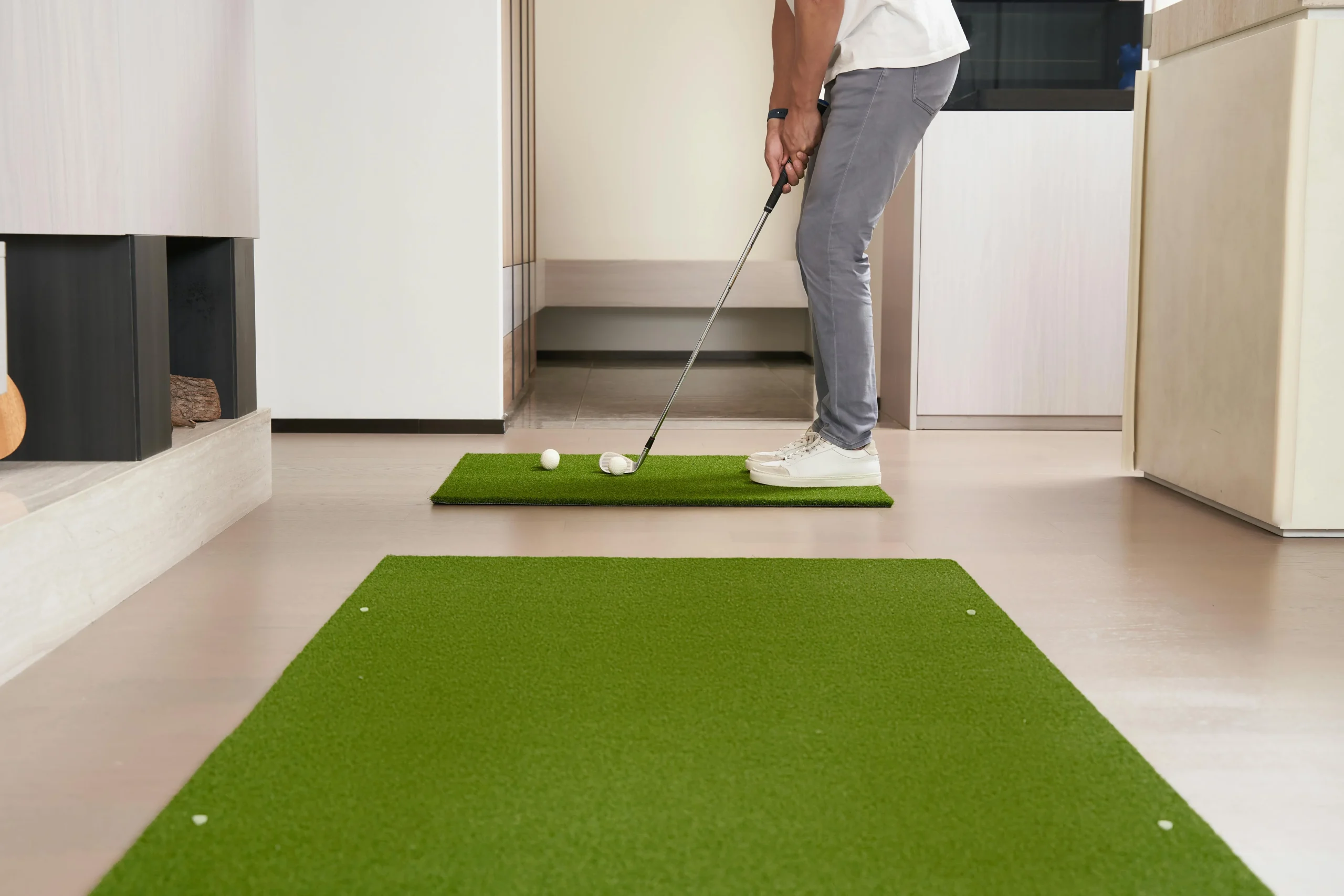
Suggested 35-minute session structure:
Minutes 1–10: Doing path work. Start with the gate drill using an alignment stick. Do the first 20 without a ball; then start off with one. It acts as a warm-up and locks in your stroke path before getting to practice drills that will yield performance results.
Minutes 11–20: Distance control. Play with the playing card target drill or lag putting to different distances. Cycle at least three different distances. Keep track of how many times out of 10 you hit or land on the target.
Minutes 21–30: Chipping drills. Switch to foam ball chipping using the towel target drill. Two different clubs or two different trajectories, a low bump-and-run and a higher-lofted chip. Ten successful landings per variation.
Minutes 31–35: Pressure drill cool-down. Always end every session with one pressure drill. Either the five-in-a-row putting drill or a chipping streak challenge. Finishing under pressure sharpens your mind and mimics closing out a round.
What mistakes do golfers make when practicing the short game at home?
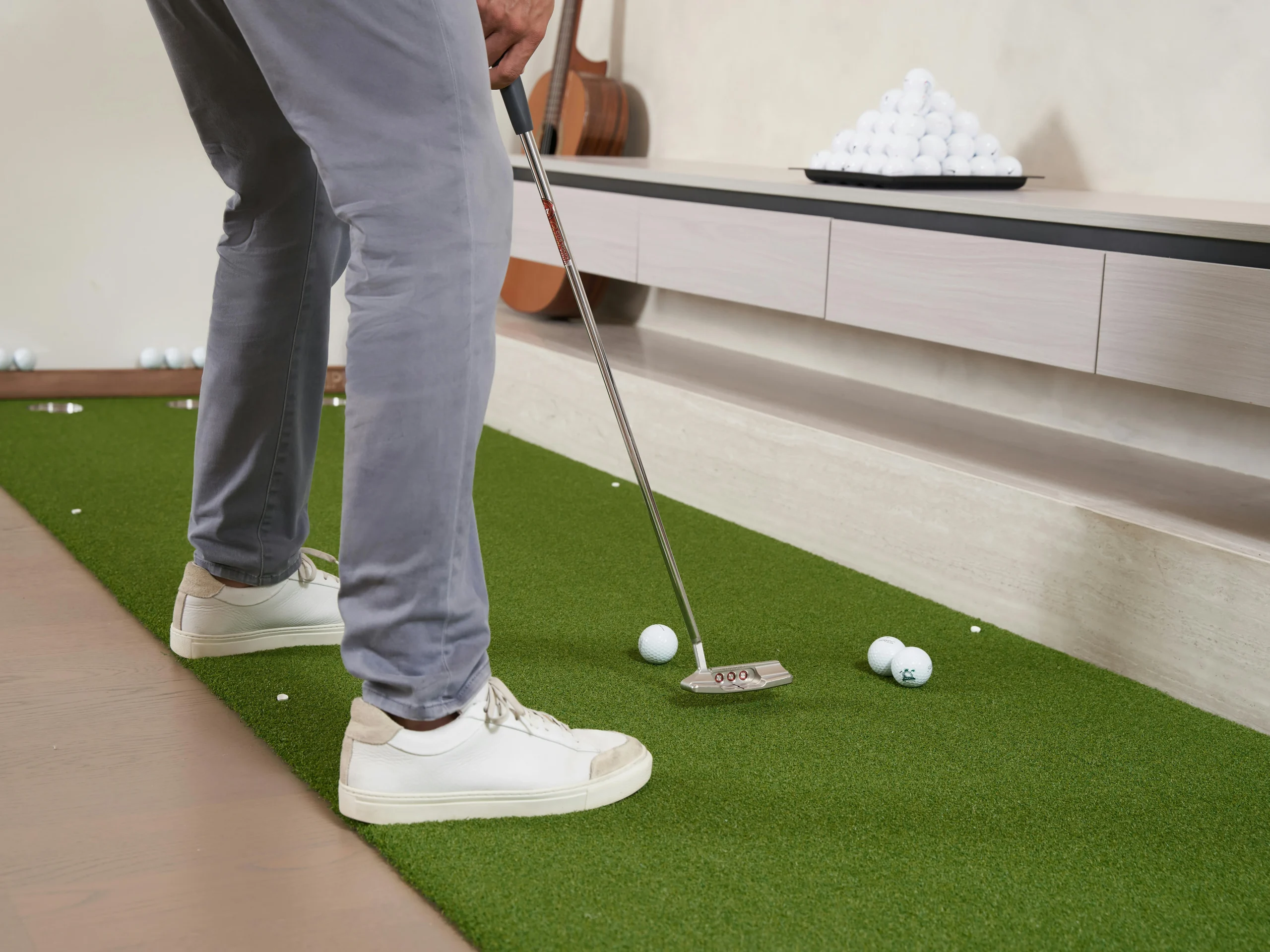
The biggest mistake is mindless, rote repetition, rolling putt after putt toward the same spot without a target, no tracking, and no structure, which engrains bad habits and fosters a false sense of improvement.
So here is how purposeful structured practice differs from random rolling:
Practicing without a target. The absence of a target means the inability to provide feedback. Every putt or chip requires a landing zone, distance, or outcome objective. Hitting balls “in the general direction” teaches you nothing, because your brain has no context in which to classify success or failure.
Ignoring fundamentals. For many a golfer, full-speed reps are done without checking grip, posture, alignment, or ball position. Indeed, home practice is the perfect time to audit fundamentals because there’s no designated-practice partner waiting and no pressure of pace of play. For the first minute of every session, make sure you confirm your setup before hitting a single ball.
Practicing only comfortable shots. You want to “park” yourself at a distance you already work well at because it feels like it’s productive. The real improvement goes on at the edges of your ability. If you never miss, then your drill is too easy. Do a comfortable version and then an advanced one; mix up the styles to practice different skills.
Conclusion: Your Living Room Is the Best Practice Facility For Short Game
You can improve your scores without needing a country club membership, an expensive launch monitor, or spending countless hours at the driving range. All it takes is 15-35 minutes a day, some budget-friendly equipment, and the commitment to practice.
The short game is where scores are won and lost, and it is the area of the game that you can fully practice without any need to leave your home. You can improve your putting with a putting mat and some alignment sticks.
You can turn any room into a chipping facility with a towel and a bag of foam balls. You can create a pressure putting/chipping practice that actually transfers to the course with casual repetition and a restart on miss.
Your golf handicap is waiting to drop. The only question is whether you’ll give your short game the focused practice it deserves, and now you have every drill you need to do exactly that, right from home.