You are standing on the 6th fairway at Royal Dornoch, 195 yards to a firm, fast green with a left-to-right crosswind blowing in off the Dornoch Firth. You reach the top of your bag and hesitate. Is it a 7 wood or a 4 hybrid? Both clubs are sitting there. You have roughly ten seconds to decide.
That hesitation costs more shots on Scottish links courses than almost any other decision point in the long game. The 7 wood vs 4 hybrid debate has been one of the most discussed equipment questions among golfers over the past three years, and for good reason. Both clubs fill roughly the same yardage gap in the bag, but they perform differently in ways that matter enormously on seaside links turf in changeable conditions.
This guide gives you a proper comparison of both clubs: how they differ in construction, ball flight, and performance across different lie types and wind conditions. It also recommends the best current models available, so that by the time you are packing for Scotland, or heading to your next round, you will know exactly which one, or which combination, makes sense for your game.
Key Takeaways
- Both clubs typically carry 20–22° of loft roughly 170–210 yards at a 90 mph driver swing speed but the 7 wood averages 8–10 yards longer due to its longer shaft.
- The 7 wood launches higher and lands softer, making it stronger for reaching firm Scottish links greens; the 4 hybrid’s lower flight is better controlled in a Scottish sea wind.
- On tight links fairways Kingsbarns, Royal Dornoch, the Old Course the 4 hybrid’s smaller head gives more confidence from awkward lies and semi-rough.
- Above 100 mph driver swing speed, the distance gap largely disappears; your choice should then be driven by ball flight and feel.
- Many mid-handicap golfers heading to Scotland find carrying both clubs replacing the 3 or 4 iron gives them a complete long-game toolkit.
What Is a 7 Wood and What Is a 4 Hybrid?
Section Summary: Both clubs exist to solve the same fundamental problem: replacing the 4 iron. But the engineering approach behind each produces meaningfully different results on the course.
The 7 Wood: A Fairway Wood With More Loft
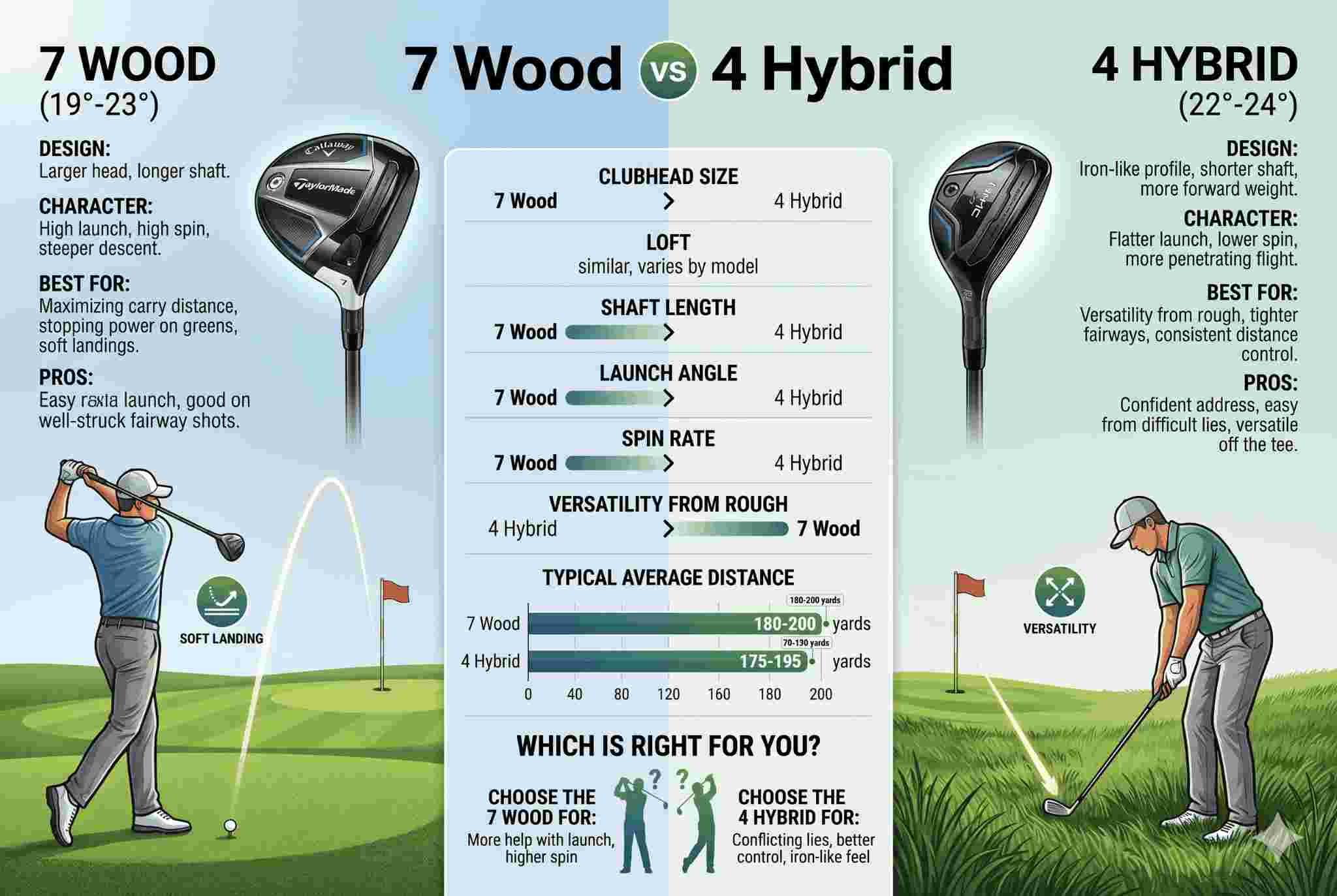
A standard 7 wood carries between 20° and 22° of loft, putting it in the same range as a 4 or 5 hybrid depending on the manufacturer. The wider head pushes the centre of gravity lower and further back, producing a higher launch angle and a steeper descent. The ball lands and stops more quickly useful when you need to hold a firm links green.
Tour professionals Xander Schauffele, Tommy Fleetwood, Dustin Johnson, and Ludvig Åberg all carry 7 woods in current setups, reflecting a shift back toward high-lofted fairway woods at the game’s highest level. For the recreational golfer, the larger head makes the 7 wood notably more forgiving on off-centre contact than a hybrid.
The 4 Hybrid: The Iron-Wood Crossbreed
A 4 hybrid combines a fairway wood’s rounded head profile with an iron’s shorter shaft, typically around 39 to 40 inches. The result is a club that produces a lower, more penetrating ball flight than the 7 wood, with better versatility from uneven lies, tight lies, and semi-rough.
The lower flight of the 4 hybrid is both its strength and its limitation. In calm conditions, it offers more controllable trajectory and easier shot shaping. In strong crosswinds the kind you will encounter at Turnberry’s Ailsa Course, a ball that bores through the wind rather than ballooning above it can be a significant advantage.
Important The Loft Overlap Problem
At the same stated loft, a 7 wood will almost always launch higher and spin more than a 4 hybrid. Two clubs both marked 21° can behave very differently the wood going 8–10 yards farther with a steeper angle of descent, the hybrid flying lower with more run-out. Testing this difference on a launch monitor before a Scotland trip is time very well spent.
Distance, Ball Flight, and Carry: What the Data Shows
Carry Distance Across Swing Speeds
For a golfer with a driver swing speed of around 90 mph, a properly fitted 7 wood will typically carry 8 to 10 yards further than a 4 hybrid of equivalent loft. For faster swingers above 100 mph, the gap shrinks considerably and can effectively disappear one reason lower-handicap golfers often prefer a hybrid.
| Driver Swing Speed | 7 Wood Carry (avg) | 4 Hybrid Carry (avg) | Distance Gap | Recommended |
|---|---|---|---|---|
| Under 80 mph | 155–170 yards | 145–160 yards | ~10 yards | 7 Wood ✓ |
| 80–90 mph | 175–195 yards | 165–185 yards | 8–10 yards | 7 Wood ✓ |
| 90–100 mph | 190–210 yards | 182–205 yards | 5–8 yards | Either |
| Over 100 mph | 205–225 yards | 200–220 yards | 0–5 yards | 4 Hybrid ✓ |
Ball Flight and Trajectory
The 7 wood launches at a higher angle and reaches a greater peak height, producing a steeper angle of descent. This is the characteristic that makes it valuable for approach shots where you need the ball to land and hold a green at Carnoustie in August, when the fairways are playing firm and fast.
The 4 hybrid’s flatter trajectory is a double-edged proposition on links courses. In a genuine links wind of 20 mph or more, a high-flying 7 wood becomes difficult to control, while the hybrid’s lower, more boring flight gives you a chance to predict where the ball is going to end up.
Scotland-Specific Tip Royal Dornoch & Kingsbarns
At courses like Royal Dornoch and Kingsbarns both of which play firm and fast through the summer experienced visitors use the 4 hybrid’s lower trajectory deliberately, playing a running approach that feeds onto the green along the ground. When you are 40 yards short of a Kingsbarns green in a headwind and the ground is firm, the 4 hybrid hit halfway up is often a more reliable option than any high-ball approach.
Forgiveness, Feel, and Workability from Different Lies
Forgiveness on Off-Centre Strikes
The 7 wood’s larger head gives it an advantage in pure forgiveness. A wider face and more perimeter weighting means a strike an inch off-centre will fly closer to its intended distance and direction than the equivalent miss with a hybrid. For golfers who play 20–25 times per year, this additional margin for error translates directly into better scores.
The tradeoff is workability. A 7 wood’s deeper, wider head makes it harder to intentionally shape shots. The 4 hybrid’s smaller, compact profile allows for more manipulation: a skilled player can chase a low cut into a right-to-left sloping green at Muirfield with a hybrid in a way that is much harder to achieve with a 7 wood.
Performance From Rough and Awkward Lies
From heavy rough the kind of deep, whippy fescue you encounter on exposed Scottish links the 4 hybrid’s smaller head cuts through more cleanly. The wider leading edge of a 7 wood can catch and twist through thick rough, resulting in an unpredictable shot.
From tight, firm fairway lies extremely common on Scottish links during dry summer months the 7 wood’s shallow face is, counterintuitively, often easier to strike cleanly. The wider sole can glide along hardpan turf rather than digging in. Golfers who struggle to pick hybrids off tight lies frequently find the 7 wood a revelation from exactly these conditions.
What Most Comparison Guides Don’t Tell You
The draw-bias characteristic of most modern hybrids built in to help the majority of amateur golfers who slice can work against you on Scottish links. When you are trying to hold a fairway that doglegs left, a hybrid’s draw bias can turn a manageable miss into an unplayable lie. The 7 wood’s more neutral face angle gives better golfers more predictable shot shape.
Choosing Between a 7 Wood and 4 Hybrid for Scottish Links Golf
| 7 Wood: Choose This When… | 4 Hybrid: Choose This When… |
|---|---|
| ✓ Calm or tailwind high ball lands and holds the green | ✓ Strong links wind lower flight holds its line better |
| ✓ Long par-3s into the green from 180–200+ yards | ✓ Firm fairways where bump-and-run is the right tactic |
| ✓ Driver swing speed under 90 mph more carry for slower swingers | ✓ Shots from semi-rough or awkward stances |
| ✓ You struggle to get the ball airborne with a hybrid | ✓ Tight dog-legged holes needing controlled shot shape |
| ✓ Off the tee on shorter par-4s with wide fairways | ✓ Faster swing speeds above 100 mph control over carry |
| ✓ Maximum forgiveness on off-centre contact | ✓ You prefer an iron-like address look and feel |
How to Decide: A Step-by-Step Process
- Measure your driver swing speed Under 90 mph: the 7 wood’s distance advantage is significant, start there. Over 100 mph: the gap disappears; base the choice on ball flight and feel.
- Identify your most common scenario Long approaches in calm conditions or off the tee? 7 wood. Coastal links in variable wind, lots of semi-rough, awkward lies? Hybrid.
- Check your draw or fade tendency If you fight a slice, a draw-biased hybrid will help. If you already draw it or play a controlled fade, a neutral 7 wood may give more predictable shape.
- Count your bag You carry 14 clubs. Many mid-handicap golfers visiting Scotland carry both a 7 wood and a 4 hybrid in place of their 3 and 4 irons.
- Get a launch monitor fitting before you travel Custom fitting studios can identify which club produces optimal carry, spin, and landing angle for your specific swing.
Frequently Asked Questions: 7 Wood vs 4 Hybrid
Is a 7 wood easier to hit than a 4 hybrid?
For most recreational golfers, particularly those with moderate swing speeds under 95 mph, yes the 7 wood is easier to hit consistently. The wider head and lower centre of gravity require less precise contact to produce a playable result. Golfers who have historically struggled with hybrids often find the 7 wood a significant improvement in both carry distance and ball flight quality.
Can I carry both a 7 wood and a 4 hybrid in the same bag?
Yes, and many mid-handicap golfers playing Scottish links choose to do exactly that. The typical setup removes the 3 iron and 4 iron and replaces them with a 7 wood and a 4 hybrid, giving you a high-launch option for approach shots and a versatile, lower-flight option for windy conditions and bump-and-run play.
Which club is better for playing into a headwind on a links course?
The 4 hybrid. In a headwind of 15–25 mph the kind you will regularly encounter at Royal Troon, Turnberry, or any East Lothian links the hybrid’s lower, more penetrating ball flight is significantly more controllable than the 7 wood’s high launch. A ballooning 7 wood shot into a links headwind can lose 20–30 yards of carry and land well short of the intended target.
What loft is a 7 wood, and what does that compare to?
A standard 7 wood is typically 21–22° of loft, which places it in the same range as a 4 hybrid (19–22°), a 3 hybrid in some manufacturers’ lineups, and historically a 3 iron. Loft equivalencies vary by brand always check the actual loft when comparing clubs rather than assuming the number on the head tells the whole story.
Do Tour professionals play 7 woods?
Yes, increasingly so. Xander Schauffele, Tommy Fleetwood, Dustin Johnson, Ludvig Åberg, Adam Scott, and Sahith Theegala have all carried 7 woods in recent seasons. Dustin Johnson famously used a 9 wood at the 2020 Masters. The trend reflects modern ball technology with tour balls spinning less from distance, higher-lofted woods compensate by launching higher and still landing softly.
Should I carry both a 7 wood and a 4 hybrid for a Scotland trip?
For a first trip to Scotland, carrying both is a very strong option. Remove your 3 iron and 4 iron, and replace them with a 7 wood and a 4 hybrid. You will have a high-ball option for still-day approaches, and a low, boring option for the inevitable links crosswind two complementary tools for one of the most varied golfing environments in the world.
Top-Rated Clubs: Our 2026 Picks
Expert-tested 7 woods and 4 hybrids available now chosen for performance on Scottish links courses.
Best 7 Woods (2026)
Qi4D Max 7 Wood
Most Forgiving 7 Wood 2026
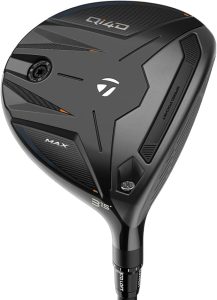
The 200cc perimeter-weighted head delivers tour-proven Twist Face technology and a 4° loft sleeve the most forgiving 7 wood in TaylorMade’s 2026 lineup. Ideal for mid-handicappers who want distance and consistency off both the fairway and the tee.
✓ Pros
- Twist Face technology reduces mishit dispersion
- 4° adjustable loft sleeve for fine-tuning
- Very high launch with steep descent holds greens
- Excellent from tight links fairway lies
✗ Cons
- Premium price point
- Larger head may not suit low-handicap players
- Limited workability for shot shaping
Quantum Max 7 Wood
Best for High Launch · 2026
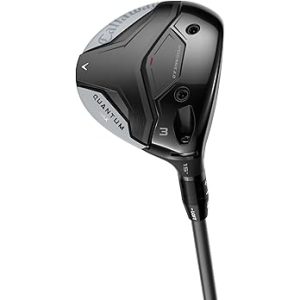
Callaway’s AI-optimised face design produces exceptional consistency on off-centre strikes. In 2026 testing, the Quantum Max posted the highest launch angle and second-tightest dispersion of all 7-woods tested. Outstanding value for mid-handicap visitors heading to Scotland.
✓ Pros
- AI face delivers widest effective sweet spot tested
- Highest launch angle in category for 2026
- Excellent distance consistency across the face
- Speed Wave sole for low CG and more ball speed
✗ Cons
- Slightly above-average price
- High ball flight can be caught by strong headwinds
- Draw bias may not suit players who already draw
GT2 Fairway Wood
Best for Low-to-Mid Handicap
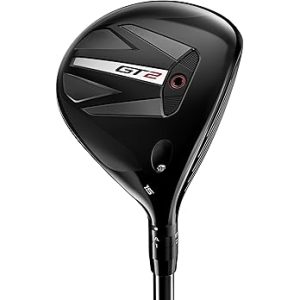
The GT2 sits at the heart of Titleist’s 2026 fairway wood range more forgiving than the GT3, higher-launching than a pure player’s model. Used on Tour by Aaron Rai. The finest balance of feel, workability and forgiveness at this loft range on the market right now.
✓ Pros
- Tour-level feel and feedback at impact
- Multiple loft options for precise fitting
- More forgiving than GT3 with similar workability
- Used by Tour professionals proven performance
✗ Cons
- Less forgiving than game-improvement models
- Best suited to lower-handicap players
- Higher investment for occasional golfers
Launcher XL Halo 7 Wood
Best Value 7 Wood 2026
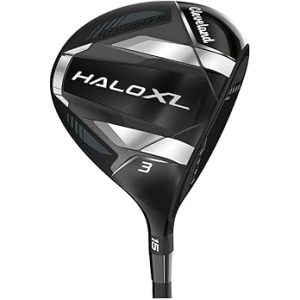
The Launcher XL Halo brings a hollow-body construction and a wide, low-profile head to make the 7 wood as easy to hit as possible. The HiBore Crown lowers the CG for effortless launch, and the MainFrame face structure maximises ball speed on every strike an outstanding value option for visiting golfers.
✓ Pros
- Excellent value significantly lower price point
- Very easy to launch from tight fairway lies
- Hollow body delivers surprising ball speed
- Lightweight shaft suits slower swing speeds
✗ Cons
- Less refined feel than premium models
- Limited adjustability
- Not the longest option for faster swingers
G430 Max Fairway Wood
Highest MOI 7 Wood 2026
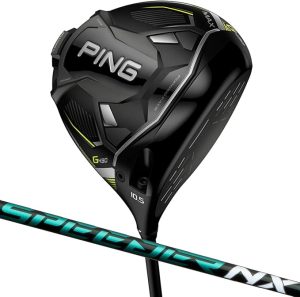
Ping’s G430 Max uses a high-density tungsten back weight to achieve the highest MOI in the G430 fairway family. The Facewrap technology wraps the Maraging steel face around the crown and sole, generating ball speed well above the USGA limit across the entire face. A top choice for golfers who prioritise confidence and consistency.
✓ Pros
- Highest MOI in the G430 range for maximum forgiveness
- Maraging C300 steel face for elite ball speed
- Tungsten back weight for stability on mishits
- Neutral ball flight easy to work both ways
✗ Cons
- Large head profile not for every player
- Less distance than Qi4D Max for some swing speeds
- Fixed loft no adjustment sleeve
Best 4 Hybrids (2026)
Qi4D Max Rescue (4H)
Most Forgiving Hybrid 2026
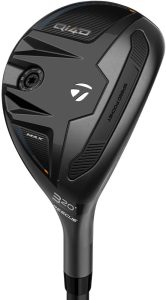
Rear weighting and high MOI deliver impressive ball speed and consistently tight dispersion across the entire face. Golf Monthly’s 2026 testing found it ‘the best looking hybrid tested in years.’ Excellent choice for high-handicap golfers visiting Scotland for the first time.
✓ Pros
- Twist Face reduces gear-effect on off-centre strikes
- Thru-Slot Speed Pocket maximises low-face ball speed
- High launch ideal for reaching long par-3s
- Confidence-inspiring large head profile
✗ Cons
- Less workable than player’s hybrids
- Draw bias can be challenging on tight doglegs
- Larger profile than traditional hybrid feel
Quantum Max Hybrid (4H)
Best Overall Hybrid · 2026
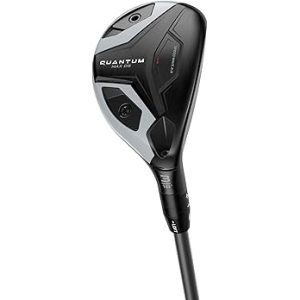
Rated best overall hybrid for 2026 by multiple independent testing outlets. Callaway’s AI-designed face closes the distance gap between fairway woods and mid-irons. The 24g tungsten bridge positions CG low for a high, held ball flight. Exceptional from tight links lies.
✓ Pros
- AI face rated most consistent hybrid for 2026
- Tungsten bridge for low, forward CG
- Penetrating ball flight ideal for links crosswinds
- Works from semi-rough, hardpan, and tight lies
✗ Cons
- Premium price compared to budget alternatives
- Can feel board-stiff for players used to soft irons
- Ball flight may be too high for extremely fast swingers
GT2 Hybrid (3H or 4H)
Best Feel + Versatility · 2026
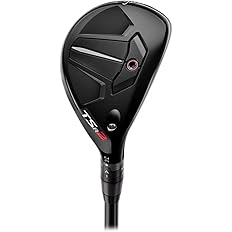
The GT2 boasts the highest MOI of the entire GT hybrid line. Used by Aaron Rai and Tom Kim on Tour. The large profile instils confidence at address and the soft, precise feel is exceptional. Recommended for golfers who want workability alongside forgiveness on Scottish links.
✓ Pros
- Exceptional feel tour players choose this model
- Highest MOI in GT range for maximum consistency
- Available as 3H or 4H for precise gapping
- Versatile for shaping shots on dog-leg holes
✗ Cons
- Higher price point than budget alternatives
- Best suited to mid-to-low handicappers
- May not launch as high as game-improvement hybrids
Launcher XL Halo Hybrid
Best Value Hybrid 2026
The Launcher XL Halo Hybrid delivers a hollow-body, draw-biased design that is the most forgiving in Cleveland’s lineup. The HiBore Crown technology lowers the CG dramatically, making it almost impossible to miss the sweet spot. Brilliant for first-time visitors to Scotland who need reliable performance from any lie.
✓ Pros
- Exceptional forgiveness for the price
- HiBore Crown for effortless high launch
- Lightweight shaft suits seniors and slower swingers
- Very consistent from fairway, rough, and fringe
✗ Cons
- Draw-biased watch on tight left-to-right doglegs
- Limited shot-shaping ability
- Less precise feel than premium models
G430 Max Hybrid
Most Consistent Hybrid 2026
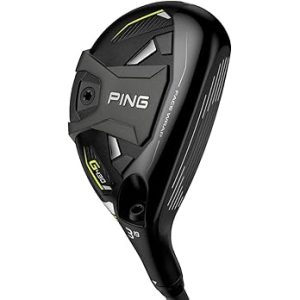
Ping’s G430 Max Hybrid uses a Facewrap construction and high-density tungsten in the sole to deliver the highest MOI in the G430 hybrid family. The result is a club that feels identical whether you hit it on the heel, toe, or dead centre perfect for the unpredictable conditions and lies you encounter on Scottish links.
✓ Pros
- Most consistent MOI of any mainstream hybrid
- Maraging C300 steel face for excellent ball speed
- Works reliably from semi-rough and awkward stances
- Neutral ball flight no forced draw bias
✗ Cons
- Fixed hosel no loft adjustment
- Premium brand price
- Slightly conservative look compared to rivals
The Verdict: What to Put in Your Bag
There is no single right answer to the 7 wood vs 4 hybrid debate but there are clear answers for different types of golfer.
If you are a mid-to-high handicap golfer with a driver swing speed below 95 mph, and you want a single long-game club that launches high, carries distance, and gives maximum forgiveness on off-centre strikes, the 7 wood is the stronger choice. The TaylorMade Qi4D Max and Callaway Quantum Max are both outstanding options.
If your swing speed is above 100 mph, if you play in conditions where the wind is a consistent factor which means virtually every round in Scotland or if you value the ability to shape shots and play low, running approaches, the 4 hybrid offers more versatility. The Callaway Quantum Max and Titleist GT2 are the two best options in 2026 for golfers who need both control and forgiveness.
For those making a first trip to Scotland and genuinely unsure: consider carrying both. Remove your 3 iron and 4 iron, and replace them with a 7 wood and a 4 hybrid. You will have a high-ball option for still-day approaches, and a low, boring option for the inevitable links crosswind.
Ready to Find Your Perfect Club?
Visit Golf Scotland Tours to browse our full range of fairway woods and hybrids. Our expert team can help you find the ideal club for Scottish links conditions.